


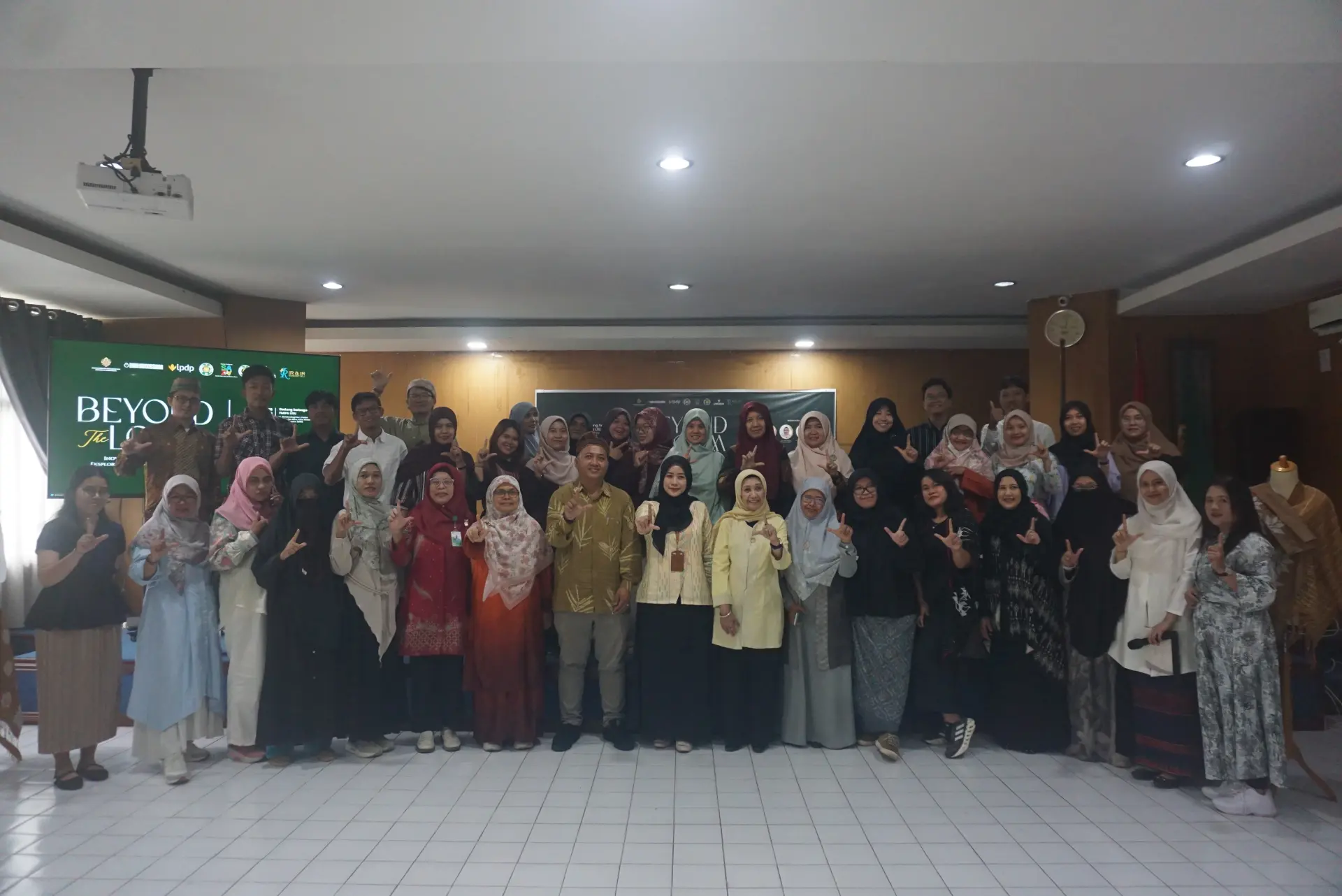
HUMAS FAHUTAN - The Natural Fiber and Natural Dye Research Cluster (KK SAZWA) of Universitas Sumatera Utara (USU) successfully organized a workshop entitled “Beyond The Loom: Innovation in Malay Weaving Tools and Sustainable Natural Fiber Exploration” over two days, from June 6–7, 2026. The event took place at the Hall of the Faculty of Mathematics and Natural Sciences (FMIPA) USU on the first day and continued at the Institute for Research and Community Service (LPPM) USU Building on the second day.
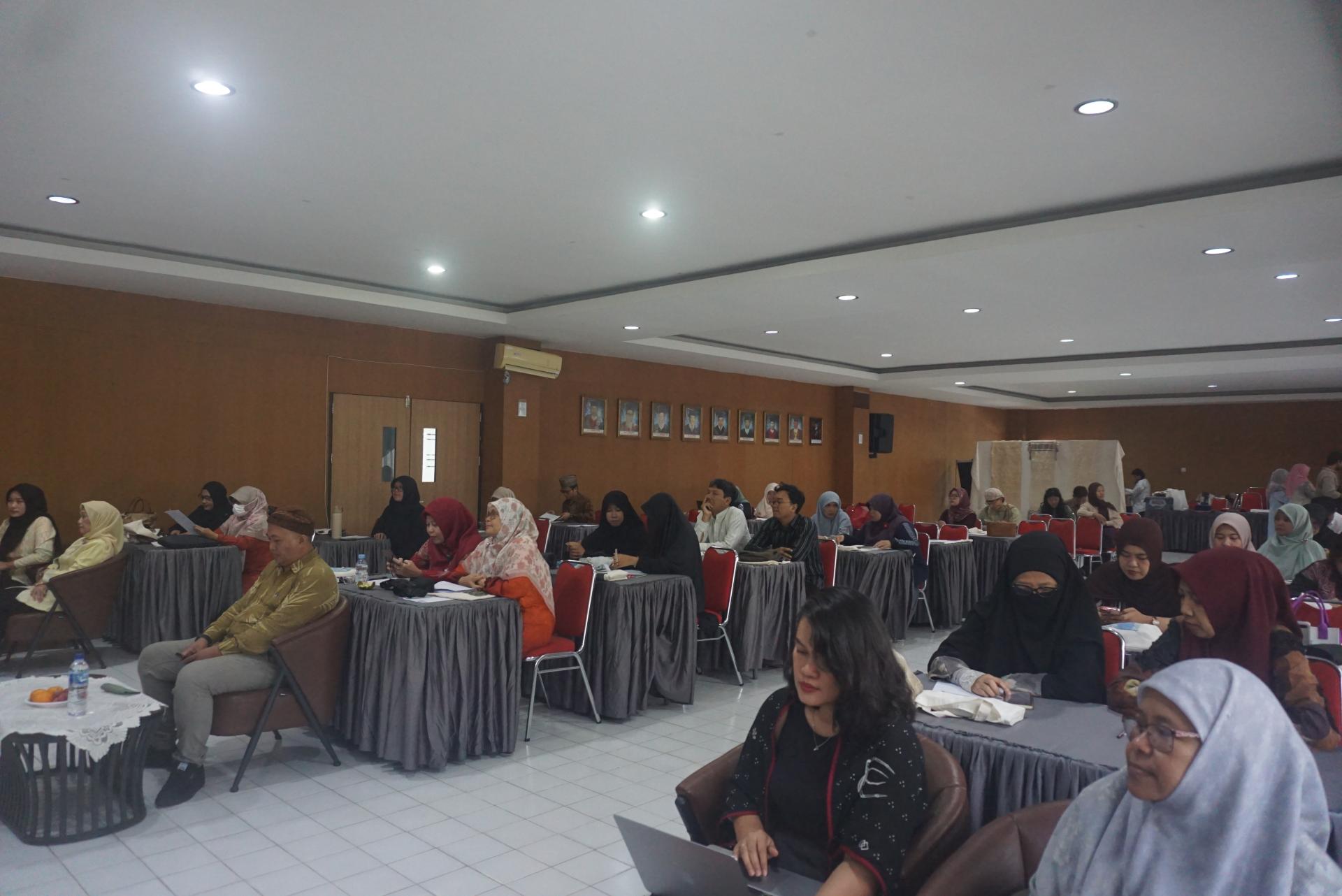
The workshop served as a platform for collaboration and knowledge exchange, bringing together academics, researchers, industry practitioners, lecturers, students, and various stakeholders involved in the development of natural fibers, natural dyes, and sustainable weaving technologies.
The event was attended by the Head of KK SAZWA, Dr. Tito Sucipto; the Dean of the Faculty of Forestry USU, Prof. Arida Susilowati; the Head of the USU Center of Excellence for Science and Technology (PUI) Songket, Dr. Tengku Syarfina; Fatimah Rangkuti, S.Ds., Chief Strategy Officer and Research Consultant of Padapa Natural Dye and Fiber; and was moderated by Dr. Iwan Risnasari. The workshop also welcomed lecturers from various faculties within USU and stakeholders with a strong interest in sustainable material development and the preservation of Indonesia’s weaving heritage.
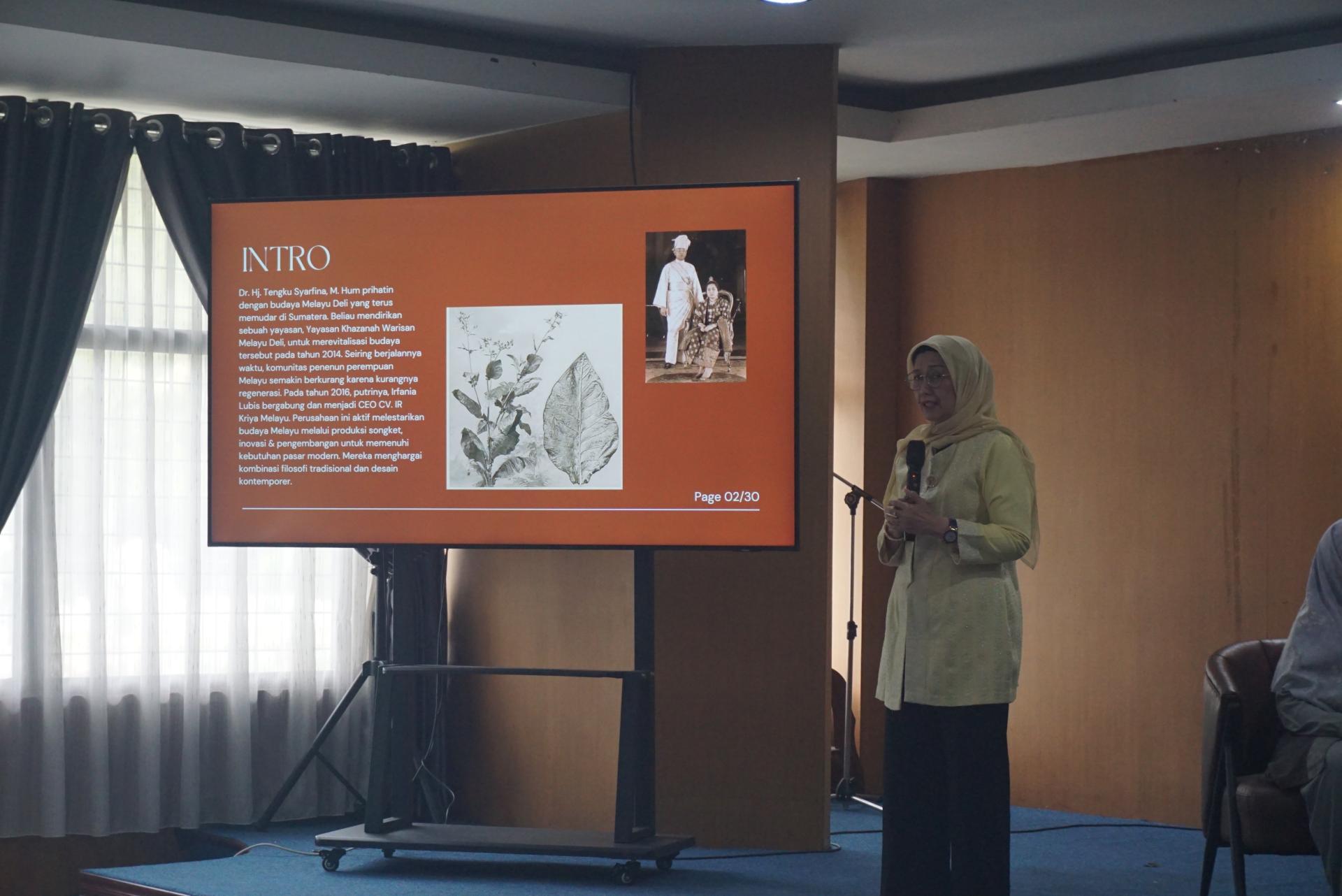
In his opening remarks, Dr. Tito Sucipto explained that the theme Beyond The Loom reflects the spirit of moving beyond the traditional function of weaving tools as textile production equipment toward innovations that integrate science, technology, culture, and sustainability.
“Natural fibers and natural dyes hold tremendous potential as environmentally friendly materials of the future. Through this event, we aim to encourage interdisciplinary collaboration to generate innovations that benefit society, industry, and the environment,” he stated.
Meanwhile, the Dean of the Faculty of Forestry USU, Prof. Arida Susilowati, emphasized the importance of utilizing local biological resources sustainably through research- and innovation-based approaches that address future needs.
Throughout the two-day workshop, participants gained comprehensive insights into various aspects of natural fiber development and weaving technology. One of the key sessions focused on the development of Malay weaving tools designed to improve weaving efficiency and comfort while preserving the cultural values embedded in the tradition.
The workshop also featured an exploration of Indonesia’s diverse natural fibers, highlighting their potential for development into value-added products. Participants were introduced to a variety of natural fiber sources that can serve as sustainable alternatives for textile and creative industry applications.
Another highlight was the presentation of innovative materials derived from orange peel waste, demonstrating how organic waste can be transformed into valuable products while supporting circular economy principles. This innovation showcased how research outcomes can create new materials with both economic and environmental benefits.
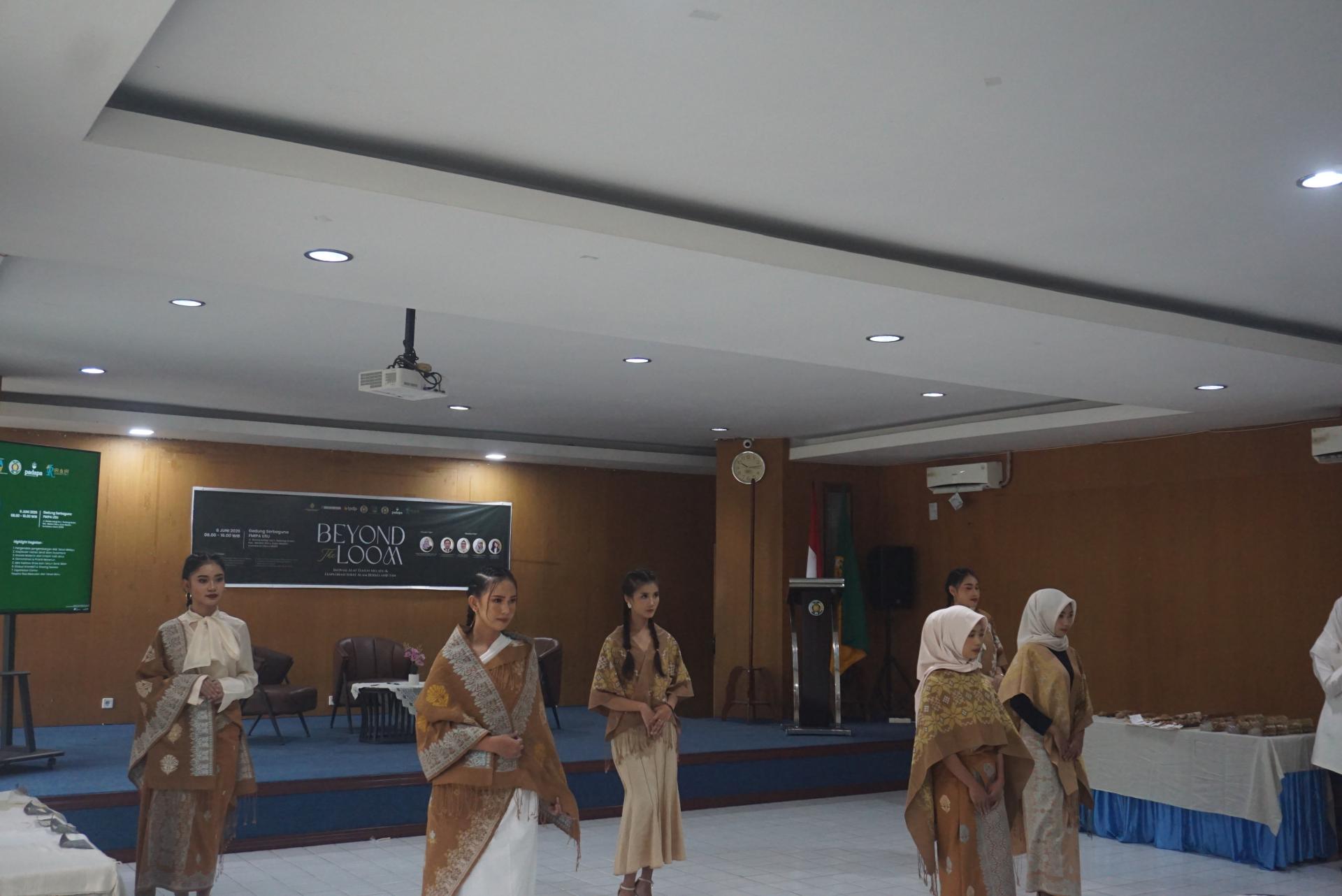
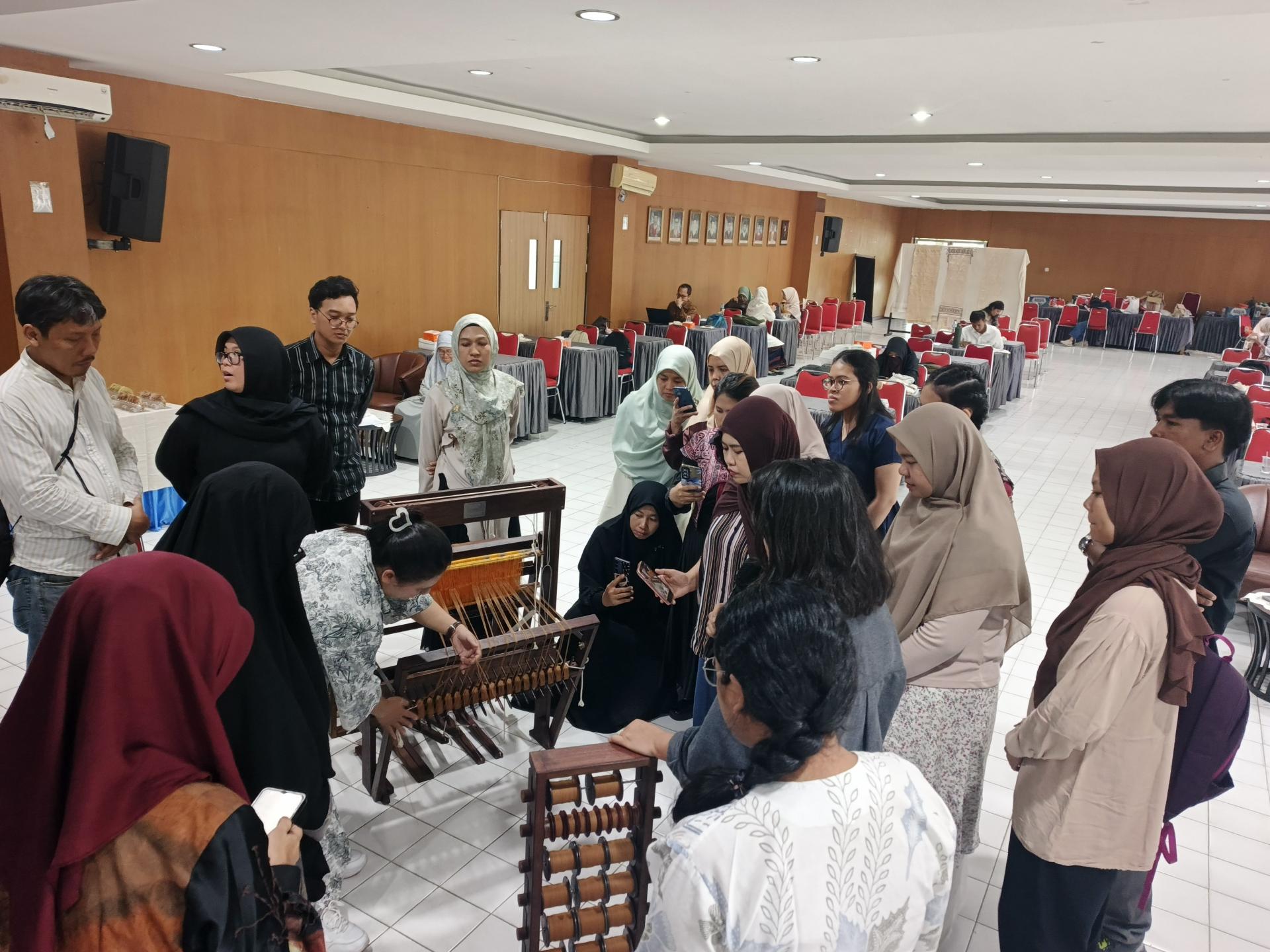
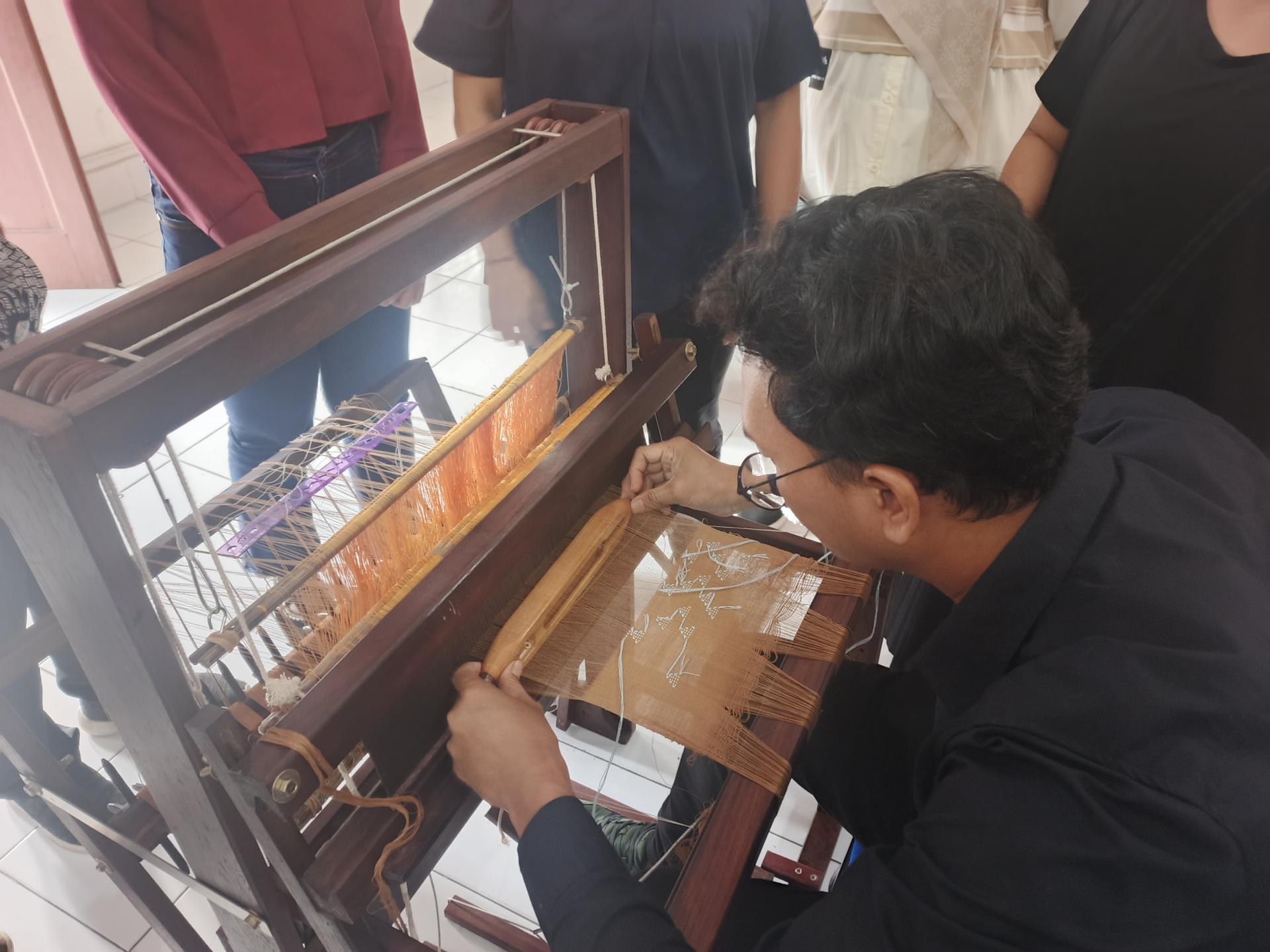
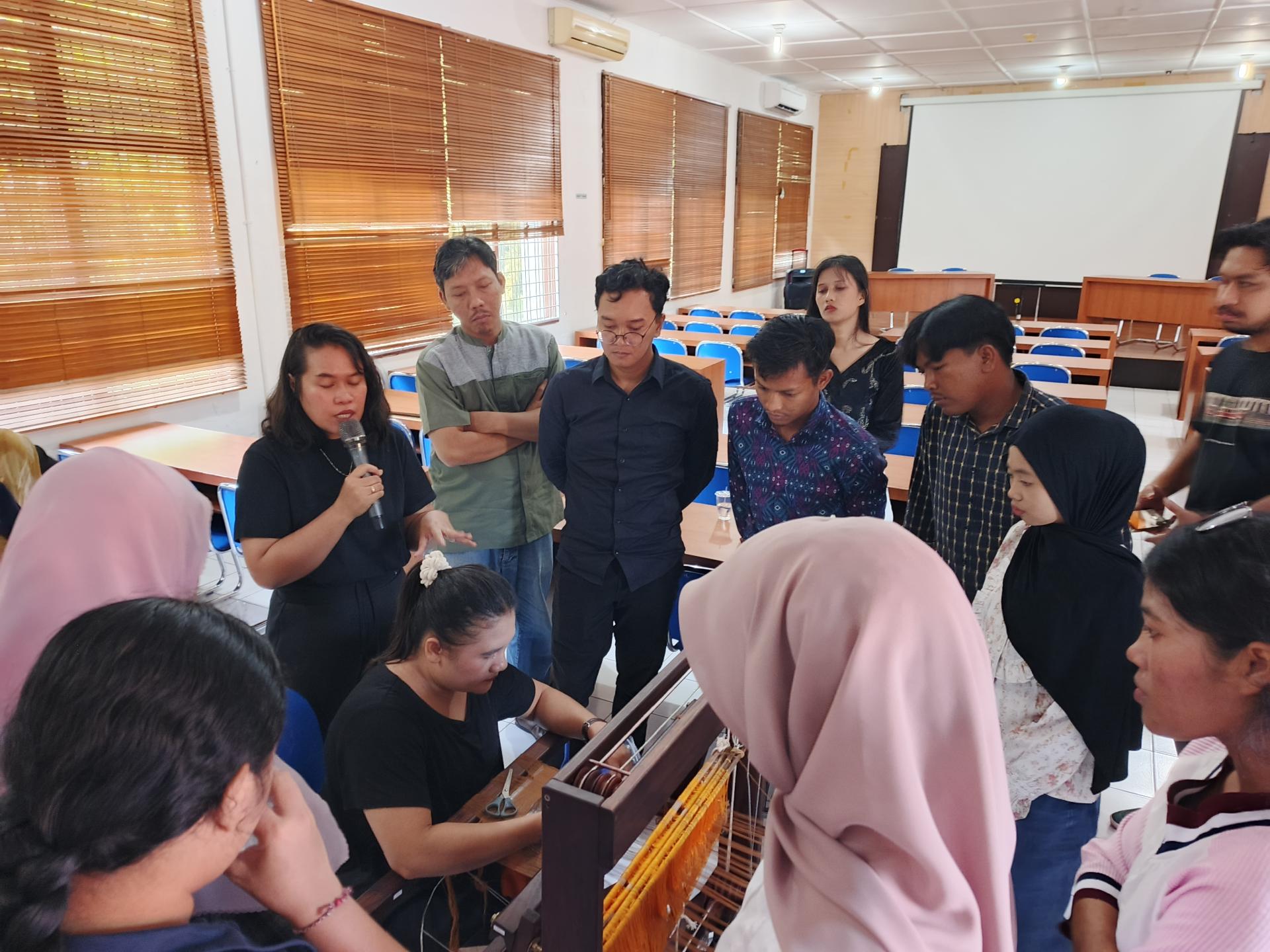
As part of the hands-on learning experience, participants took part in live weaving demonstrations and practical sessions. These activities allowed participants to gain direct experience in processing natural fibers and operating weaving tools. The event was further enriched by a mini fashion show featuring woven textile products made from natural fibers, demonstrating that sustainable materials can also offer high aesthetic value and promising market potential.
The workshop also included interactive discussions and sharing sessions, enabling participants to engage directly with speakers on the challenges, opportunities, and future directions of natural fiber and natural dye development in Indonesia. Enthusiasm was particularly evident during the Experience Corner, where participants had the opportunity to try the latest weaving tool innovations firsthand.
The second day of the workshop at LPPM USU further strengthened collaboration among researchers, academics, and strategic partners in building a research ecosystem that supports the downstream application of natural fiber-based innovations. Discussions focused on strengthening collaborative networks, exploring opportunities for innovative product development, and formulating strategies to utilize research outcomes in support of sustainable development.
The Beyond The Loom: Innovation in Malay Weaving Tools and Sustainable Natural Fiber Exploration workshop also aligns with several Sustainable Development Goals (SDGs). Through the development of Malay weaving tools, the exploration of Indonesian natural fibers, and innovations utilizing organic waste materials, the workshop supports SDG 9 (Industry, Innovation and Infrastructure) by promoting technological innovation and sustainable local resource-based industries.
The event also contributes to SDG 1 (No Poverty) by enhancing the capacity of weaving communities and entrepreneurs, potentially creating new employment opportunities and increasing income, particularly within the culture-based creative economy sector. Furthermore, the development of weaving skills and natural fiber utilization supports SDG 8 (Decent Work and Economic Growth) by fostering productive, inclusive, and sustainable business opportunities.
From an environmental perspective, the use of natural fibers and natural dyes as alternative textile materials supports SDG 12 (Responsible Consumption and Production). The utilization of renewable resources and innovations derived from orange peel waste demonstrate a commitment to resource efficiency and waste reduction through circular economy approaches.
Moreover, the development of natural fiber-based textiles has significant potential to support SDG 13 (Climate Action). The use of renewable natural materials helps reduce dependence on petrochemical-based synthetic fibers, whose production processes generate higher greenhouse gas emissions. Additionally, the utilization of organic waste as innovative raw materials contributes to reducing environmental pollution and promoting climate-friendly production practices.
Through these initiatives, the workshop not only served as a platform for scientific and technological advancement but also represented a concrete step toward sustainable development through innovation, community empowerment, cultural preservation, and environmental protection.
Through this workshop, KK SAZWA hopes to continue fostering innovations that integrate Indonesia’s rich natural resources with advancements in science and technology. Embodying the spirit of Beyond The Loom, the event represents a meaningful step toward strengthening collaboration, preserving cultural heritage, and creating sustainable solutions for the future.