


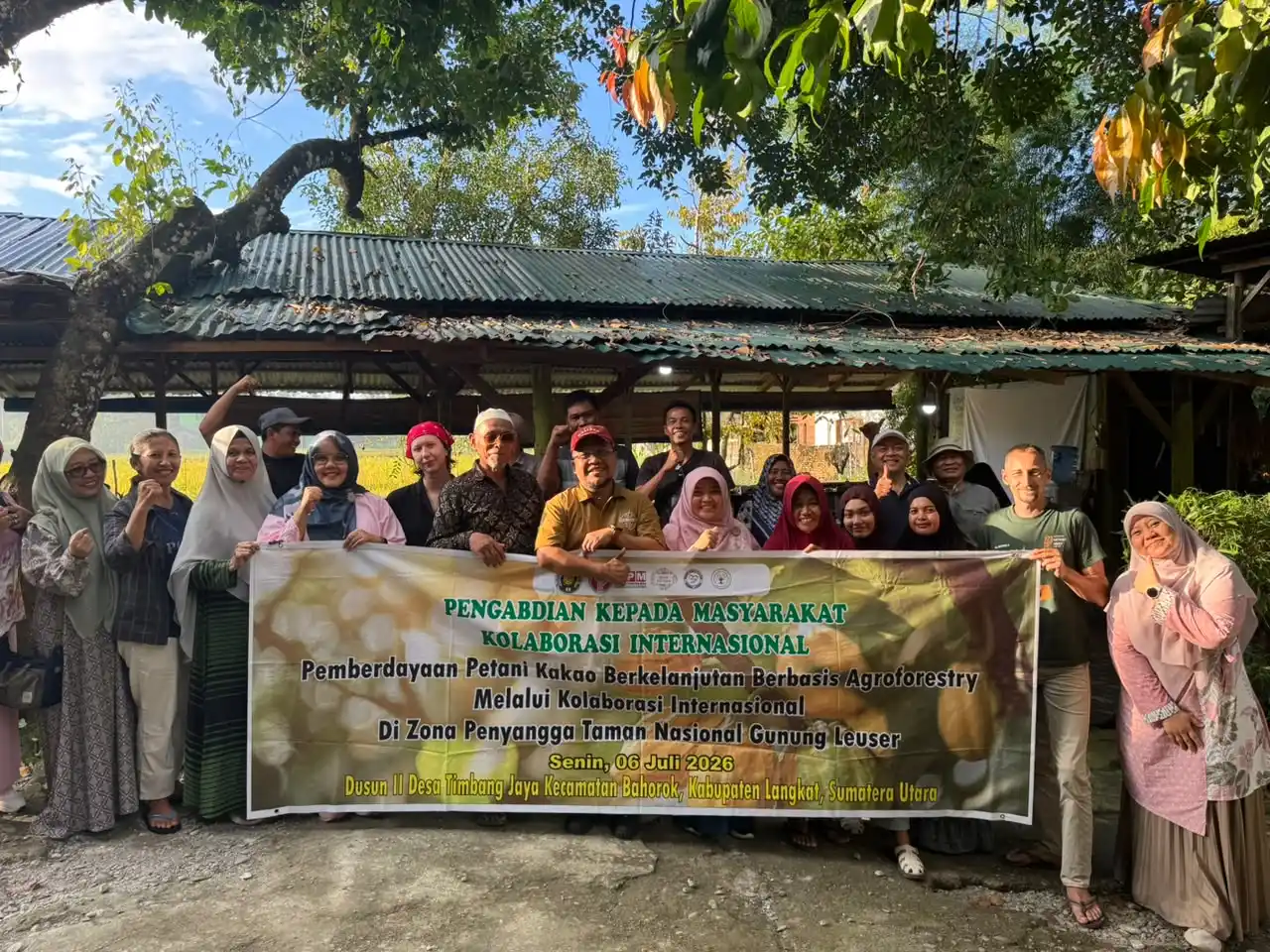
Universitas Sumatera Utara (USU) conducted an International Collaborative Community Service (PkM) Program entitled “Sustainable Agroforestry-Based Cocoa Farmer Empowerment in the Buffer Zone of Gunung Leuser National Park” on Monday, July 6, 2026, in Hamlet II, Timbang Jaya Village, Bahorok District, Langkat Regency, North Sumatra.
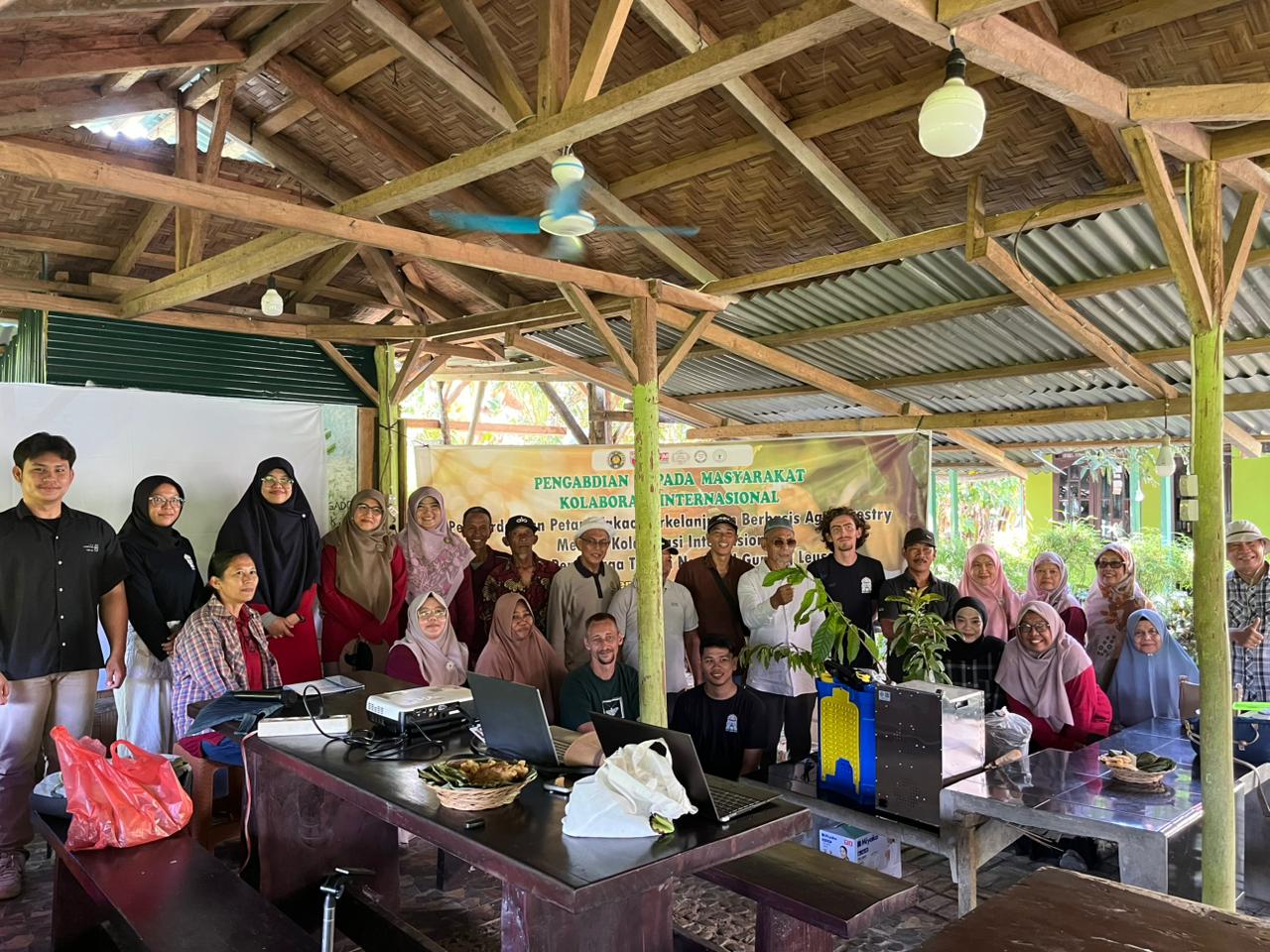
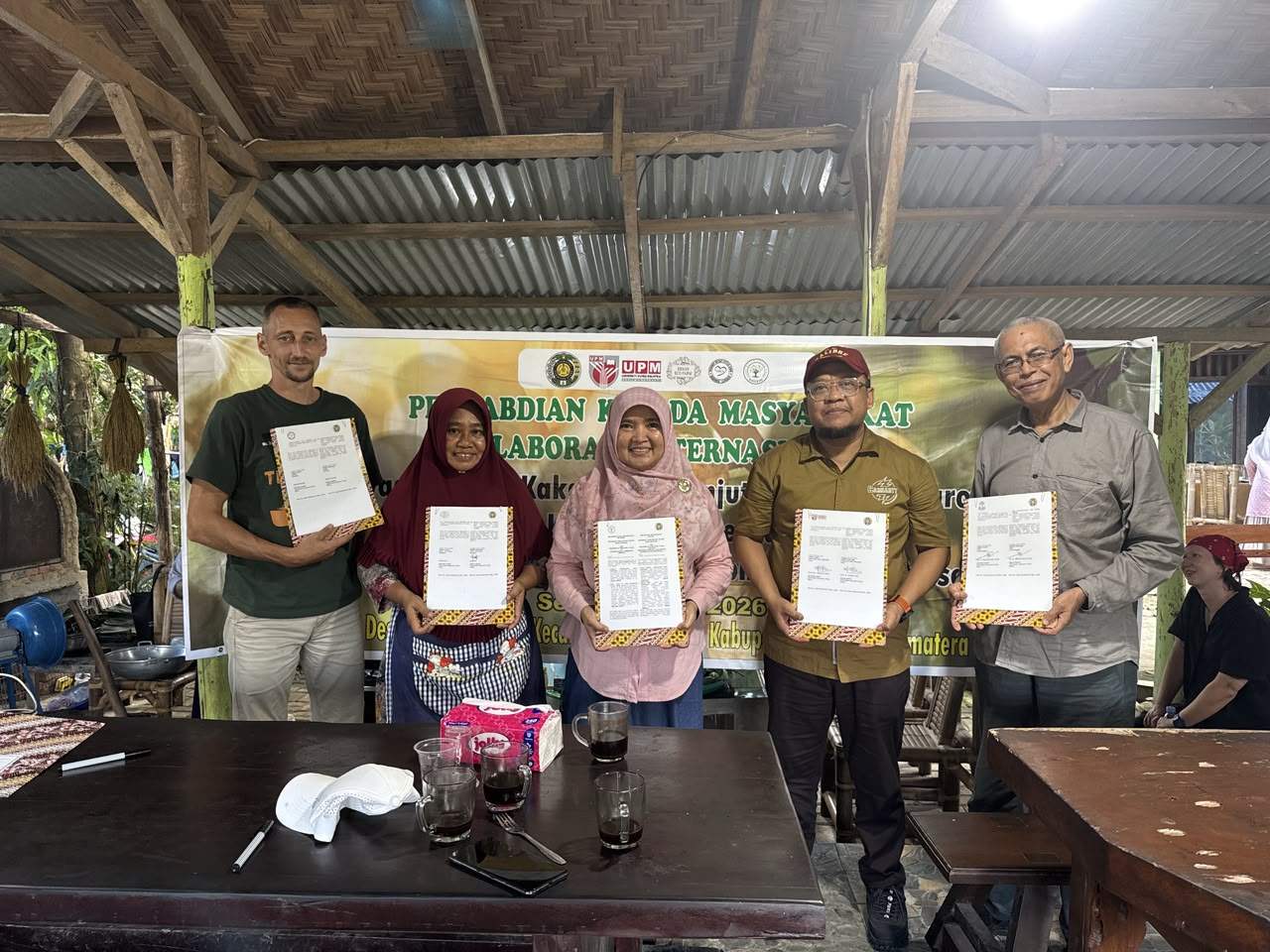
Led by Dr. Nelly Anna, the program aimed to strengthen the capacity of cocoa farmers through the implementation of productive and sustainable agroforestry systems while supporting conservation efforts in the buffer zone of Gunung Leuser National Park. The program involved the Universitas Sumatera Utara community service team in collaboration with international partner Prof. Azlizam Aziz from Universiti Putra Malaysia, as well as national partner Erna’s Eco Farm.
The activity was also attended by lecturers and students from the Faculty of Forestry at USU and supported by various partners, including Koperasi Jasa Hutan Untuk Anak (KJHUA), Yayasan Hutan Untuk Anak (YHUA), and Bukit Lawang Trust. Participants included cocoa farmers from Timbang Jaya Village, Batu Katak, Lau Damak, Sampe Raya, and several other areas in Bahorok District.
The program included training on cocoa cultivation and pest and disease management, post-harvest handling, marketing strategies, and ecotourism-based cocoa development. In addition, farmers received high-quality cocoa seedlings and multipurpose plants, as well as various equipment to support cultivation and post-harvest activities and improve farm productivity.
As part of its commitment to the sustainability of the program, the USU community service team will conduct regular monitoring and provide ongoing assistance to ensure that the agroforestry system is implemented effectively and delivers tangible benefits to the community.
This activity reflects Universitas Sumatera Utara’s commitment to strengthening the role of higher education institutions through cross-border collaboration, community capacity building, and sustainable natural resource management. The program also contributes to the achievement of the Sustainable Development Goals (SDGs), particularly SDG 2: Zero Hunger through increased agricultural productivity, SDG 15: Life on Land through the implementation of agroforestry in forest buffer zones, and SDG 17: Partnerships for the Goals through synergy among higher education institutions, international partners, communities, and local residents.