


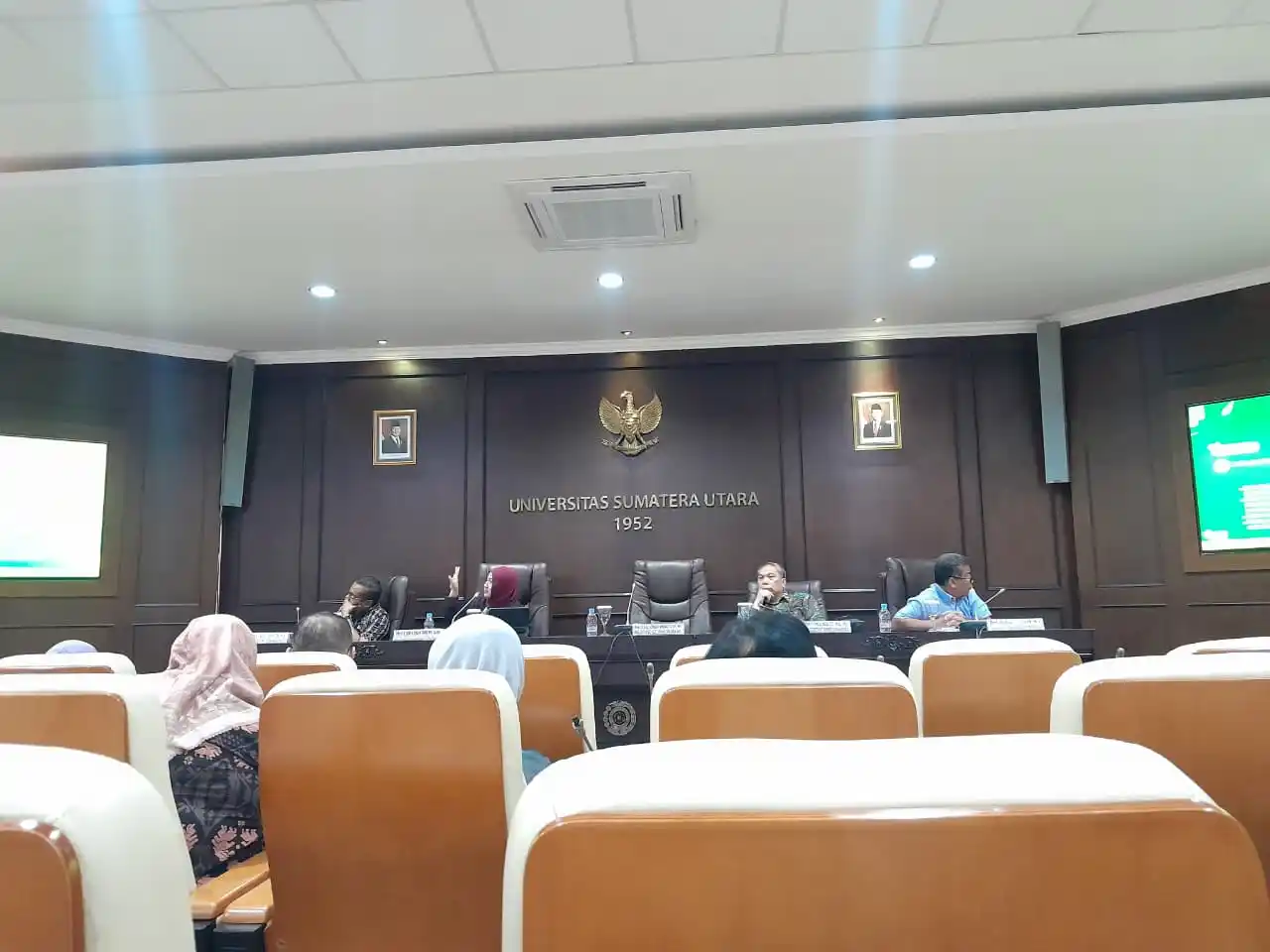
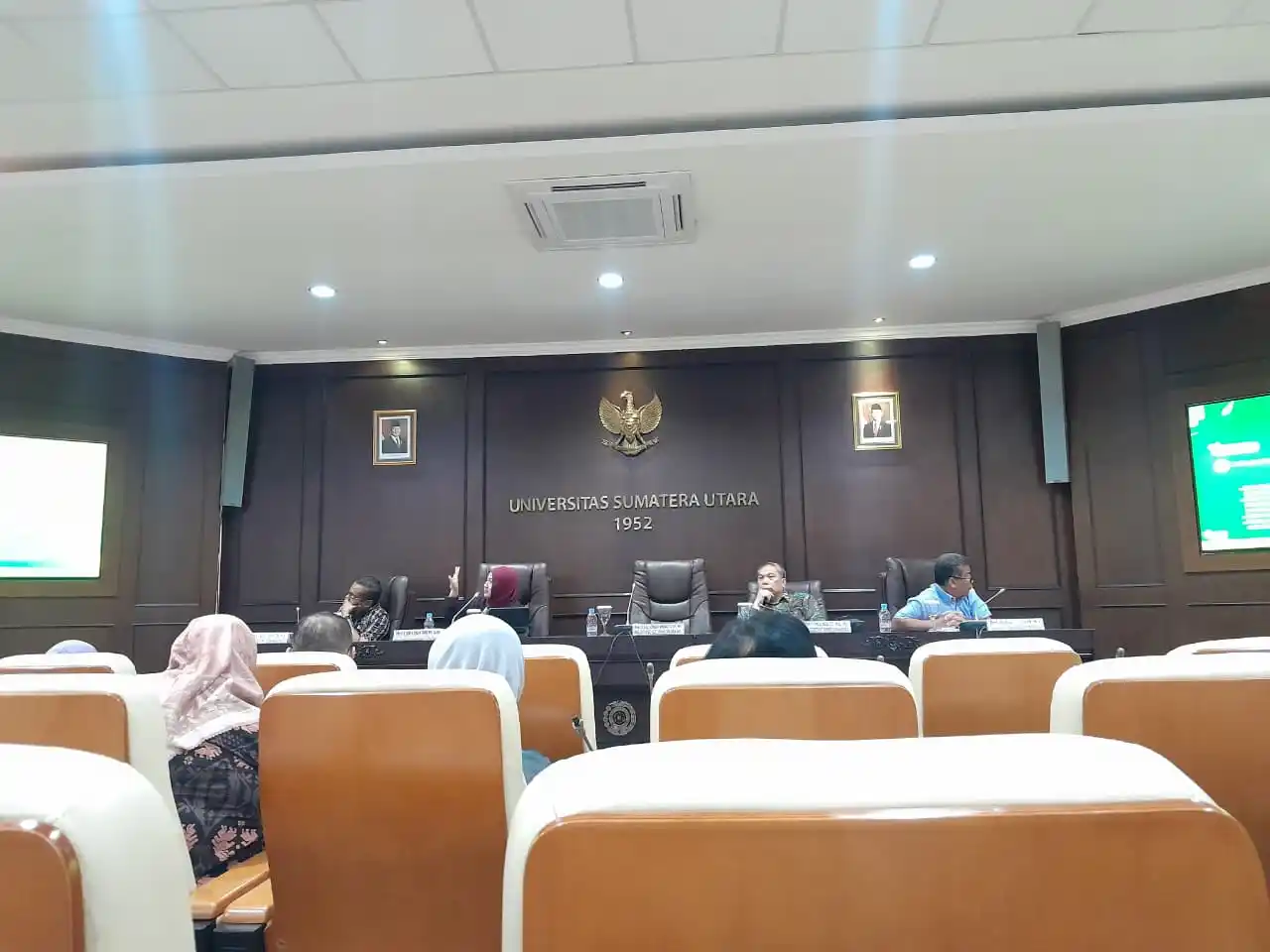
Universitas Sumatera Utara (USU) is developing a strategic action plan to improve its position in the Webometrics World Ranking by strengthening digital visibility, information transparency, and human resource capacity. The initiative was discussed during a Strategic Action Plan Meeting for the Webometrics Ranking of Universitas Sumatera Utara, held on Thursday, August 6, 2026, in the Academic Senate Room on the third floor of the USU Rectorate Building.
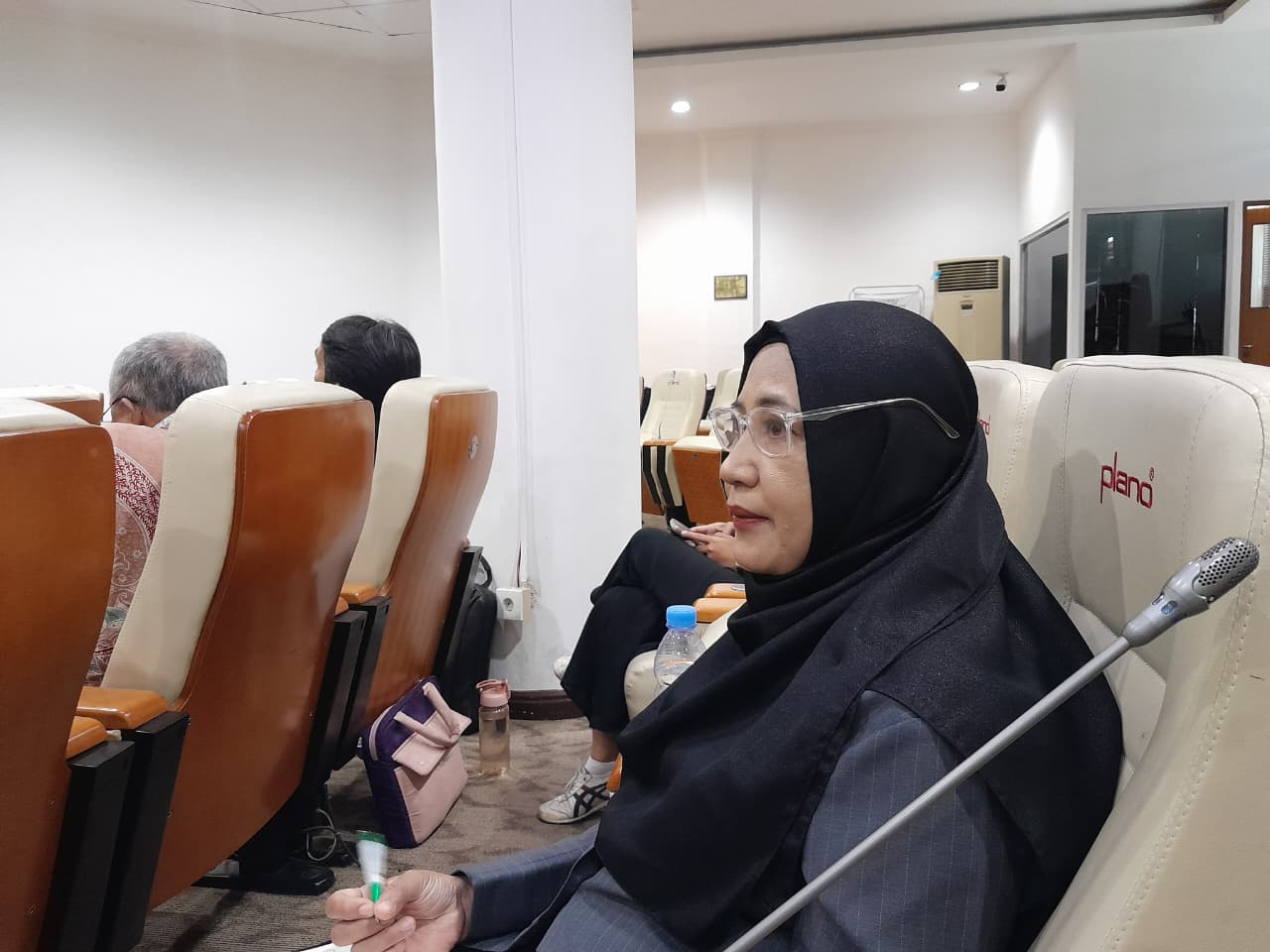
The meeting was attended by university leaders and representatives of relevant units, including the Faculty of Forestry, as part of preparations for the next Webometrics ranking period scheduled for January 2027.
In his opening remarks, USU Vice Rector III, Prof. Dr. Eng. Himsar Ambarita, explained that Webometrics is a higher education ranking system that assesses the online presence and performance of institutions based on data and information available on the web.
The Webometrics ranking is released twice a year, in January and July. With the next ranking period scheduled for January 2027, USU has begun preparing a number of strategic measures to improve its digital performance.
The discussion continued with a presentation by Director of the USU Directorate of Cooperation and Internationalization, Prof. Dr. dr. Dewi Masyithah Darlan, DAP&E, MPH., Sp.Park., who outlined several strategies for strengthening USU’s position in the Webometrics World Ranking.
One key area of focus is improving the quality and connectivity of content on the university’s official website and the websites of its various units. News publications, for example, are encouraged to provide not only information about institutional activities but also supporting documents and relevant links or references from credible external sources.
Strengthening external web coverage was also highlighted as an important strategy. The more information about USU’s activities and achievements is published by credible external websites, the greater the potential to enhance the university’s digital visibility and reach.
In addition to content and website management, improving the quality of lecturers’ academic profiles through Google Scholar is also part of the strategy. Lecturers are encouraged to update and optimize their Google Scholar profiles while ensuring that their publications and academic records are properly documented.
In terms of website management, USU has provided access for operators at each faculty and administrative unit. The university’s digital infrastructure is also equipped with various features that support content management and publication according to the needs of each unit.
Optimizing these facilities is an important part of increasing USU’s digital visibility. Each faculty and administrative unit plays a strategic role in ensuring that information on activities, achievements, research, community service, partnerships, and other institutional accomplishments is properly documented and accessible to the public.
Meanwhile, transparency can be strengthened through consistent management of academic data and lecturers’ scholarly publications. Regularly updating academic profiles through Google Scholar is one measure that can increase the visibility of scholarly work while strengthening the academic track record of USU’s academic community.
The meeting emphasized that improving USU’s Webometrics ranking does not depend solely on website management. It requires collaboration across all institutional units as well as continuous improvement in the capacity of human resources responsible for managing digital and academic information.
Through the development of this strategic action plan, USU is preparing more focused measures ahead of the January 2027 Webometrics ranking. Website optimization, stronger digital publications, greater visibility of scholarly work, and human resource development will form key components of the university’s strategy to strengthen USU’s reputation at both the national and international levels.
These efforts are aligned with the Sustainable Development Goals (SDGs), particularly SDG 4: Quality Education, through strengthening human resource capacity, access to information and knowledge, and the development of a digitally enabled academic ecosystem. The strategy also supports SDG 9: Industry, Innovation and Infrastructure, particularly through the use of digital infrastructure and innovation to strengthen knowledge management and institutional competitiveness.