


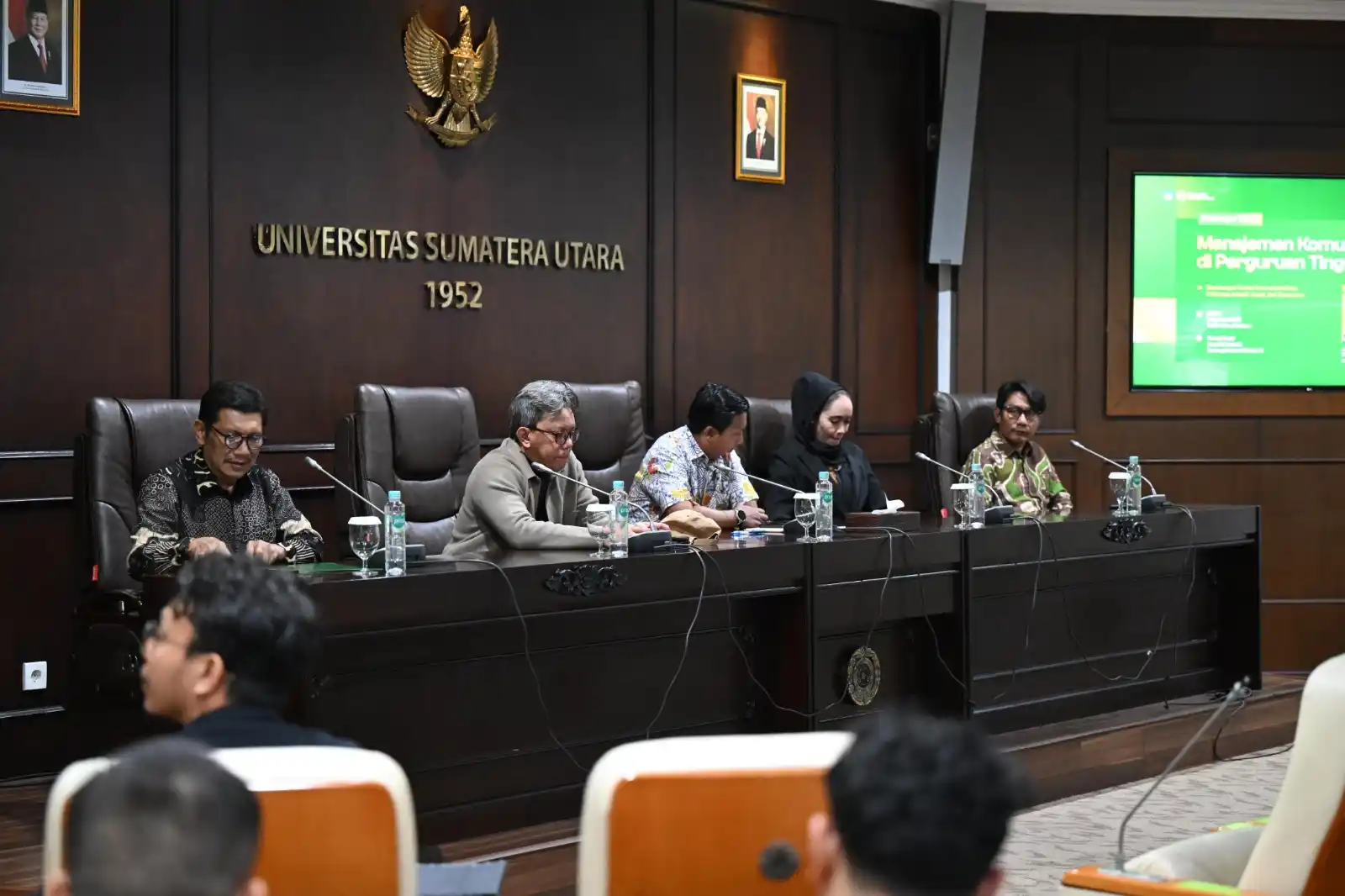
HUMAS FAHUTA - Universitas Sumatera Utara (USU) strengthened its institutional communication capacity through the Technical Guidance on Crisis Communication Management in Higher Education, held on Thursday, August 6, 2026, at the Academic Senate Room, 3rd Floor, USU Rector's Office Building.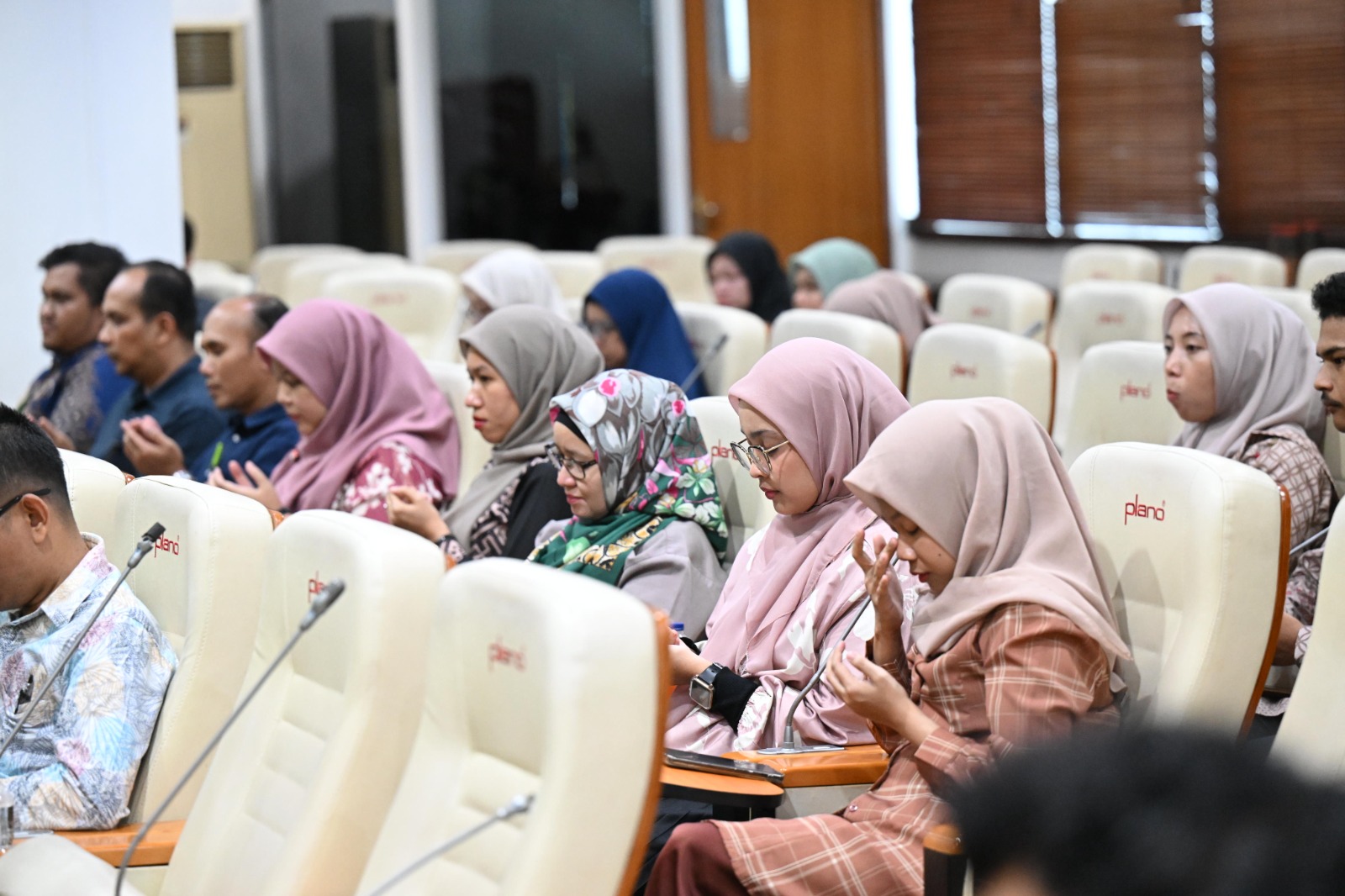
The activity began with the singing of Indonesia Raya and a prayer, followed by remarks from the Secretary of Universitas Sumatera Utara, Ikhsan Siregar. In his remarks, he emphasized the importance of communication as part of resolving various issues emerging within the university environment.
The technical guidance featured Asmono Wikan, S.Sos., M.I.Kom., Founder & CEO of PR and Media Book Authors and Editors as well as Secretary General of the Central Serikat Perusahaan Pers (SPS), as the speaker.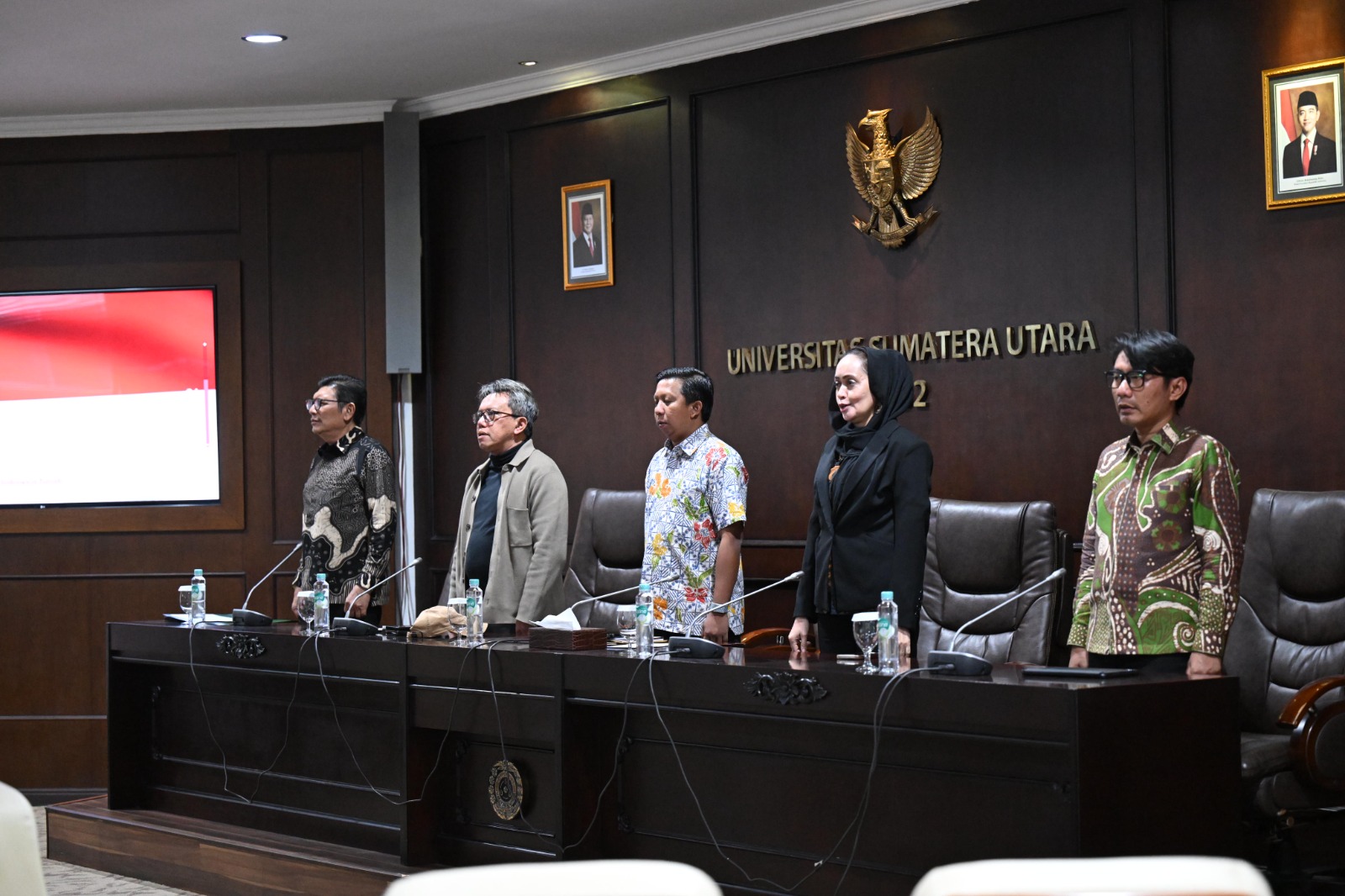
In his presentation, Asmono Wikan explained that developments in information technology have changed communication patterns between institutions and the public. The speed of information dissemination, the pressure of digital activism, social media as a public court, and increasing public moral expectations are challenges that universities need to anticipate.
He introduced five strategic stages in crisis communication management, namely recognize, or making a prompt acknowledgment; respond with empathy, by prioritizing empathy; review independently, through credible evaluation or audits; reform systemically, through systemic improvements; and rebuild narrative, by rebuilding the narrative based on the corrective actions taken.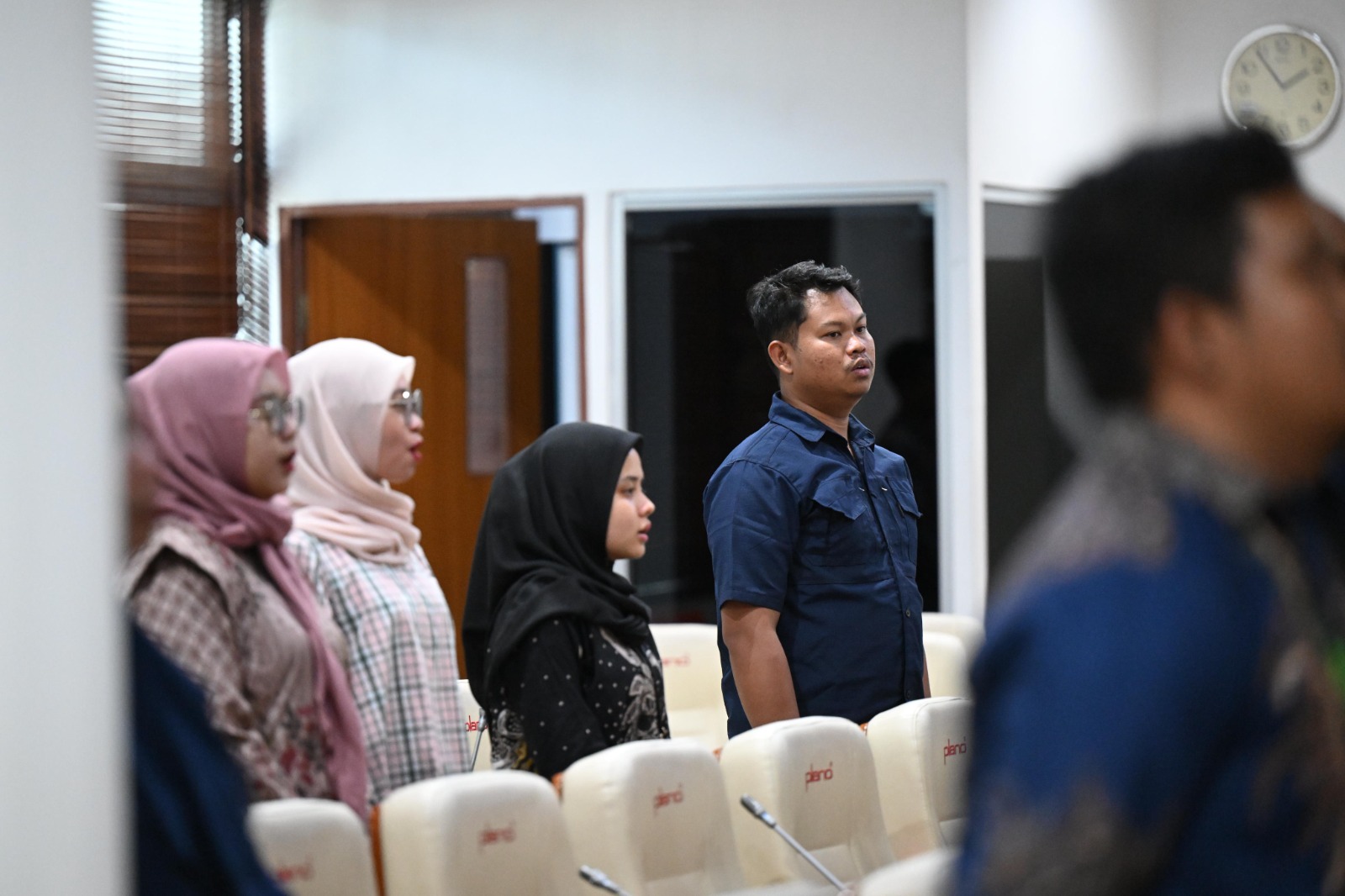
Participants were also invited to identify various issues that could potentially pose risks to universities. Several issues raised during the discussion included Single Tuition Fees (UKT), financial management transparency, cybersecurity, academic integrity, and governance issues.
Through the discussion, participants gained an understanding that issues, risks, and crises are closely interconnected. Therefore, early issue management through risk mitigation is an important step to prevent problems from developing into crises that could affect public trust.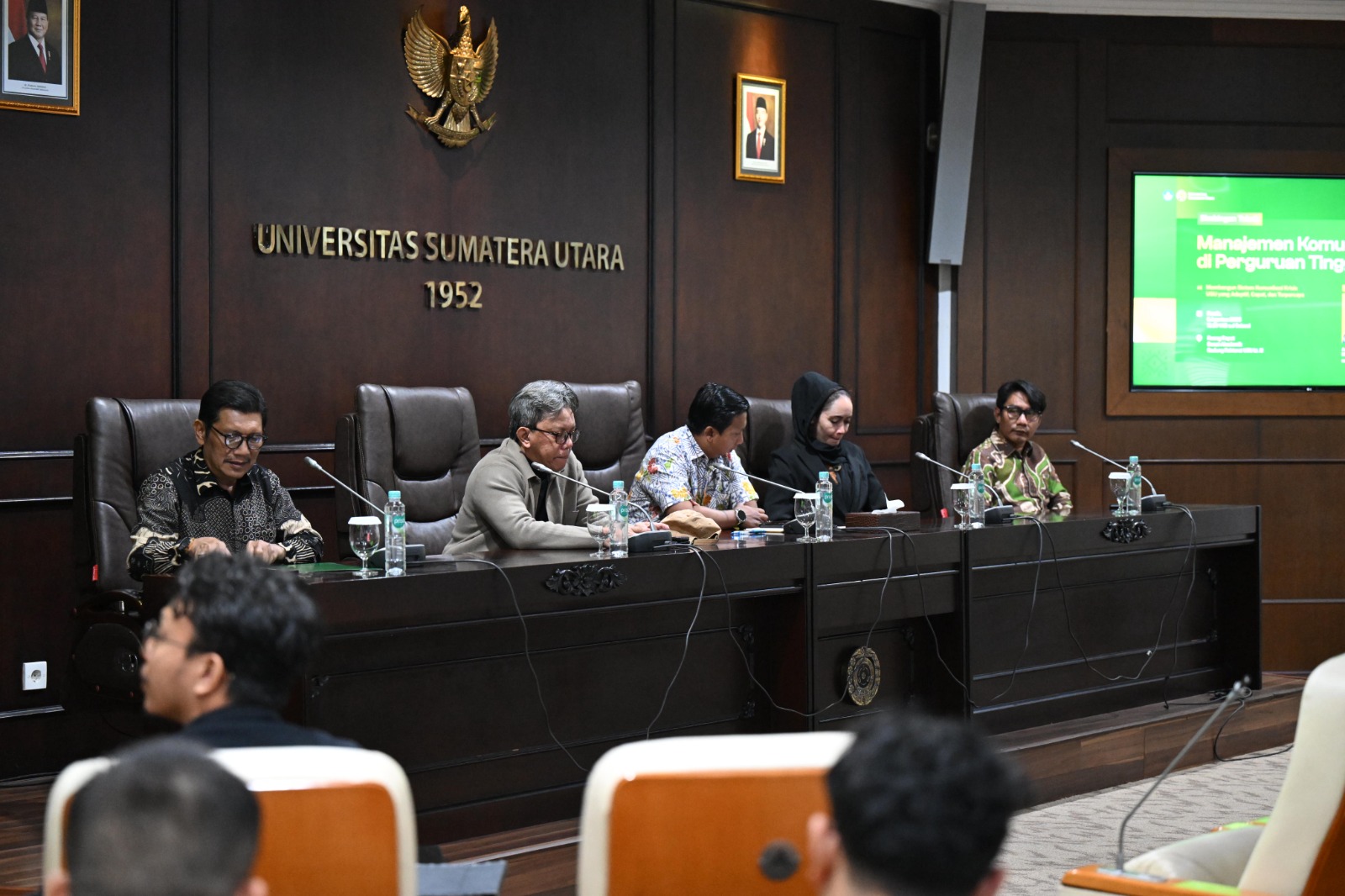
In the session on crisis communication in the digital era, the speaker also presented several case studies that had attracted public attention in Indonesia. These cases demonstrated that issues involving academic integrity, governance, ethics, sexual violence, and digital reputation can develop into crises if they are not handled promptly, appropriately, and responsibly.
To strengthen participants' understanding, the activity continued with a group simulation on handling a case study. One group addressed a suspected plagiarism case involving the theft and publication of a student's academic work without the data owner's knowledge.
In the simulation, participants took on the roles of dean, public relations officer, and institutional spokesperson. The strategies developed emphasized the importance of communicating calmly and based on facts, standing up for the victim, protecting academic rights, and taking concrete steps to resolve the issue, including encouraging the withdrawal of publications carried out without authorization.
The activity was part of efforts to enhance higher education institutions' preparedness to deal with issues that could develop into communication crises, while also strengthening transparent, responsive, and accountable institutional governance.
Strengthening crisis communication capacity is aligned with the Sustainable Development Goals (SDGs), particularly SDG 16: Peace, Justice and Strong Institutions, which promotes the development of effective, accountable, inclusive, and transparent institutions.
In the context of higher education, the ability to identify risks, respond responsibly to crises, protect the rights of the academic community, and establish transparent public communication is an important part of strengthening institutional governance.
Through this activity, USU not only equipped its human resources with skills to address communication crises but also encouraged the development of a more prepared, transparent, responsive, and problem-solving-oriented institutional culture.
Thus, crisis communication is positioned not merely as a strategy for dealing with problems after they occur, but also as part of efforts to build public trust and strengthen sustainable higher education governance.
This activity was also published on the Faculty's social media and can be accessed through the following link:
https://www.instagram.com/p/Db16VNvDwGz/?igsh=MWx6c3U2d2o3OHFicw==