


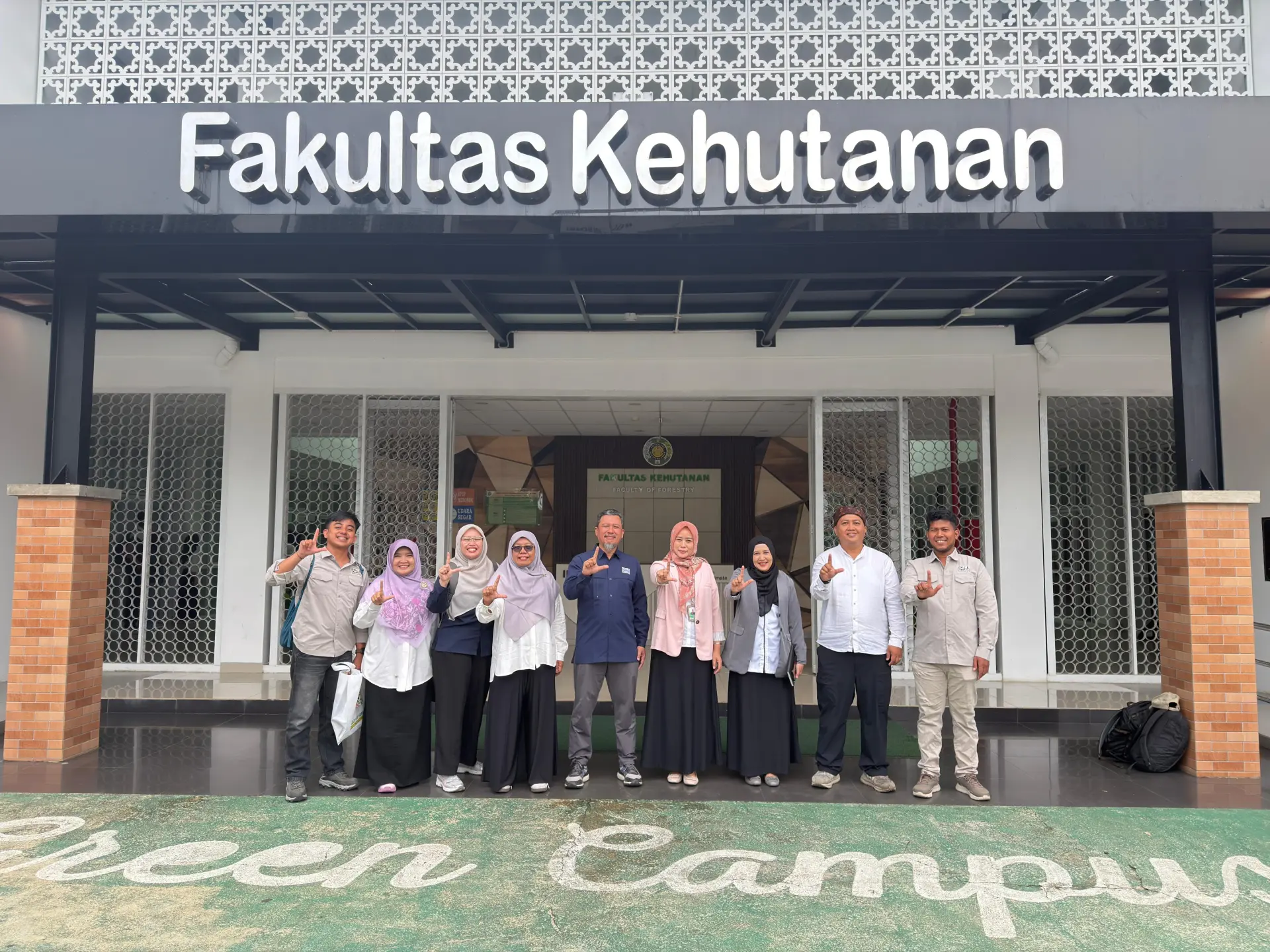
HUMAS FAHUTAN – The Faculty of Forestry, Universitas Sumatera Utara (USU), welcomed a delegation from the Foundation for Biodiversity Conservation and Creative Foundation Indonesia (PRCF Indonesia) on Monday, June 15, at the Faculty of Forestry USU. The meeting was held to strengthen institutional ties and explore opportunities for collaboration in education, research, and community engagement.
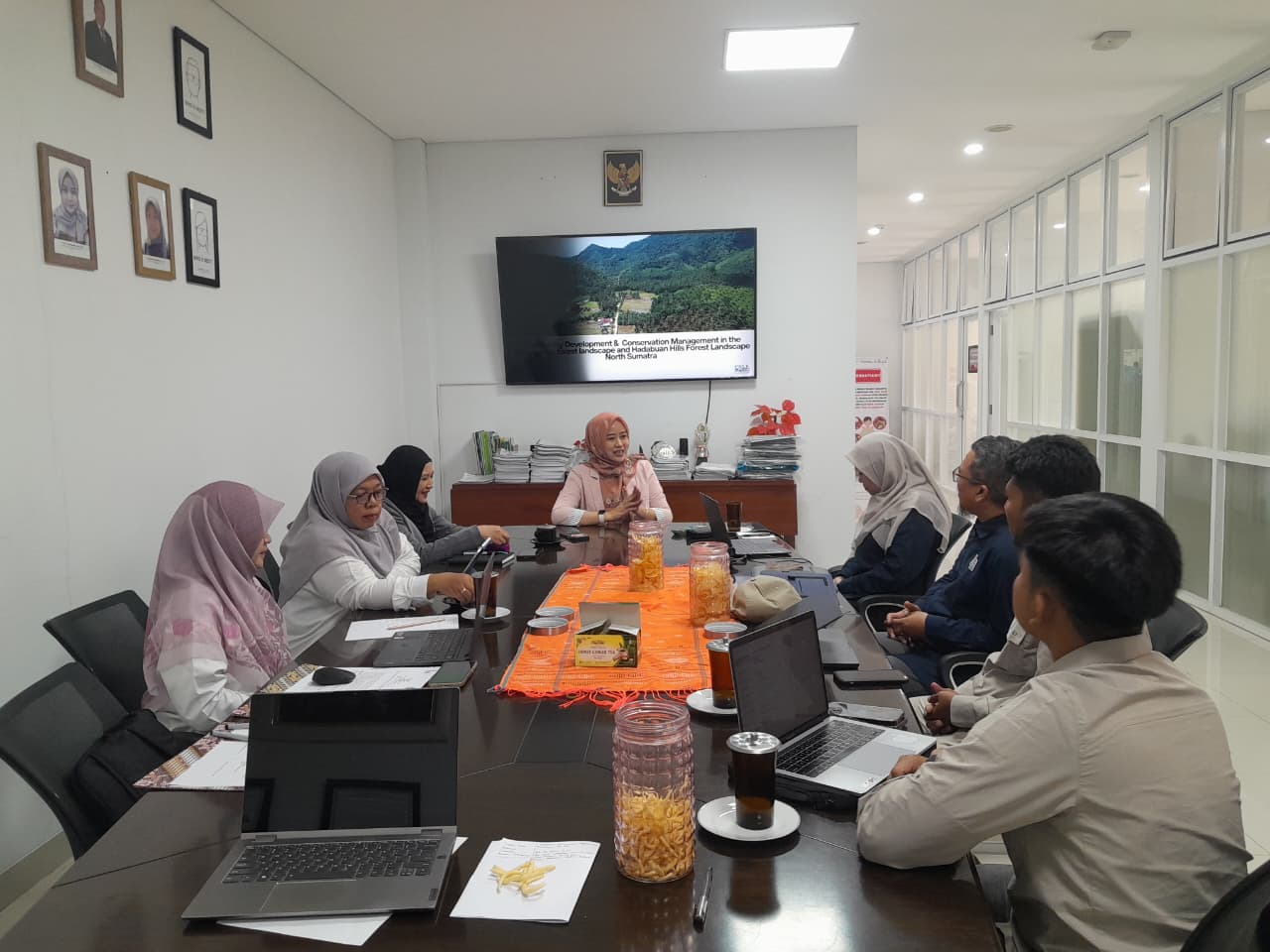
Representing PRCF Indonesia were Indonesia Director Imanul Huda, Social Forestry Officer Jonathan Situmeang, Hadabuan Hill Program Coordinator Fatimah, and Batang Toru Program Coordinator Sabaruddin. From the Faculty of Forestry USU, the meeting was attended by Dean Prof. Arida Susilowati, along with Dr. Anita Zaitunah, Dr. Nelly Anna, and Dr. Kansih Sri Hartini.
The event began with an opening session and introductions moderated by Dr. Nelly Anna, followed by a presentation on the Faculty of Forestry USU by Dr. Anita Zaitunah. In her presentation, Dr. Anita highlighted the faculty’s achievements, academic programs, and contributions to the advancement of forestry science and sustainable forest resource management.
During the subsequent session, the PRCF Indonesia team presented a range of programs and initiatives aimed at biodiversity conservation and community empowerment in forest-adjacent areas. PRCF Indonesia explained its role in facilitating wildlife conservation activities and strengthening community capacity through participatory approaches that position local communities as key actors in natural resource management.
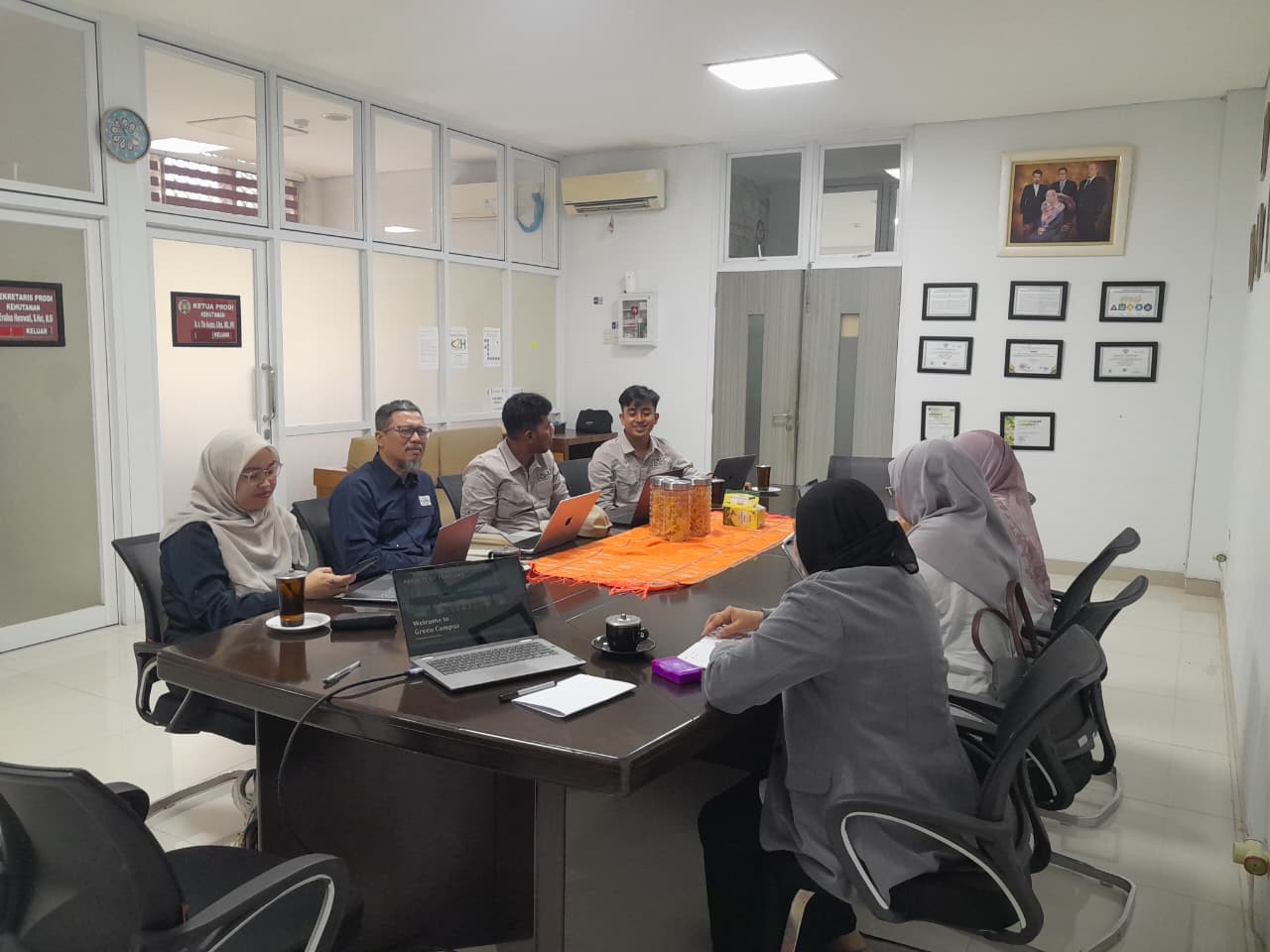
One of the programs presented was village forest management, a community-based forest governance scheme designed to improve local livelihoods while ensuring the sustainability of forest resources. PRCF Indonesia also implements biodiversity monitoring through the use of camera traps to observe wildlife activity, develops agroforestry demonstration plots, and promotes community economic empowerment through the management of non-timber forest products such as coffee and asam gelugur (Garcinia atroviridis).
The coffee products developed in the Hadabuan area have successfully entered export markets, serving as a notable example of sustainable local resource-based economic development.
In the field of wildlife conservation, PRCF Indonesia also monitors six wild cat species found within the Hadabuan Landscape. These efforts play an important role in wildlife protection and in maintaining the ecological balance of Sumatra’s forest ecosystems.
During the discussion session, Dr. Anita Zaitunah inquired about the strategies employed by PRCF Indonesia to effectively engage communities and foster self-managed, community-based initiatives. In response, Imanul Huda explained that their approach is implemented gradually through building strong communication with local communities, living alongside residents in villages, listening to their aspirations and challenges, and collaboratively identifying solutions. According to him, this approach has been key to building trust and encouraging community participation in conservation and empowerment programs.
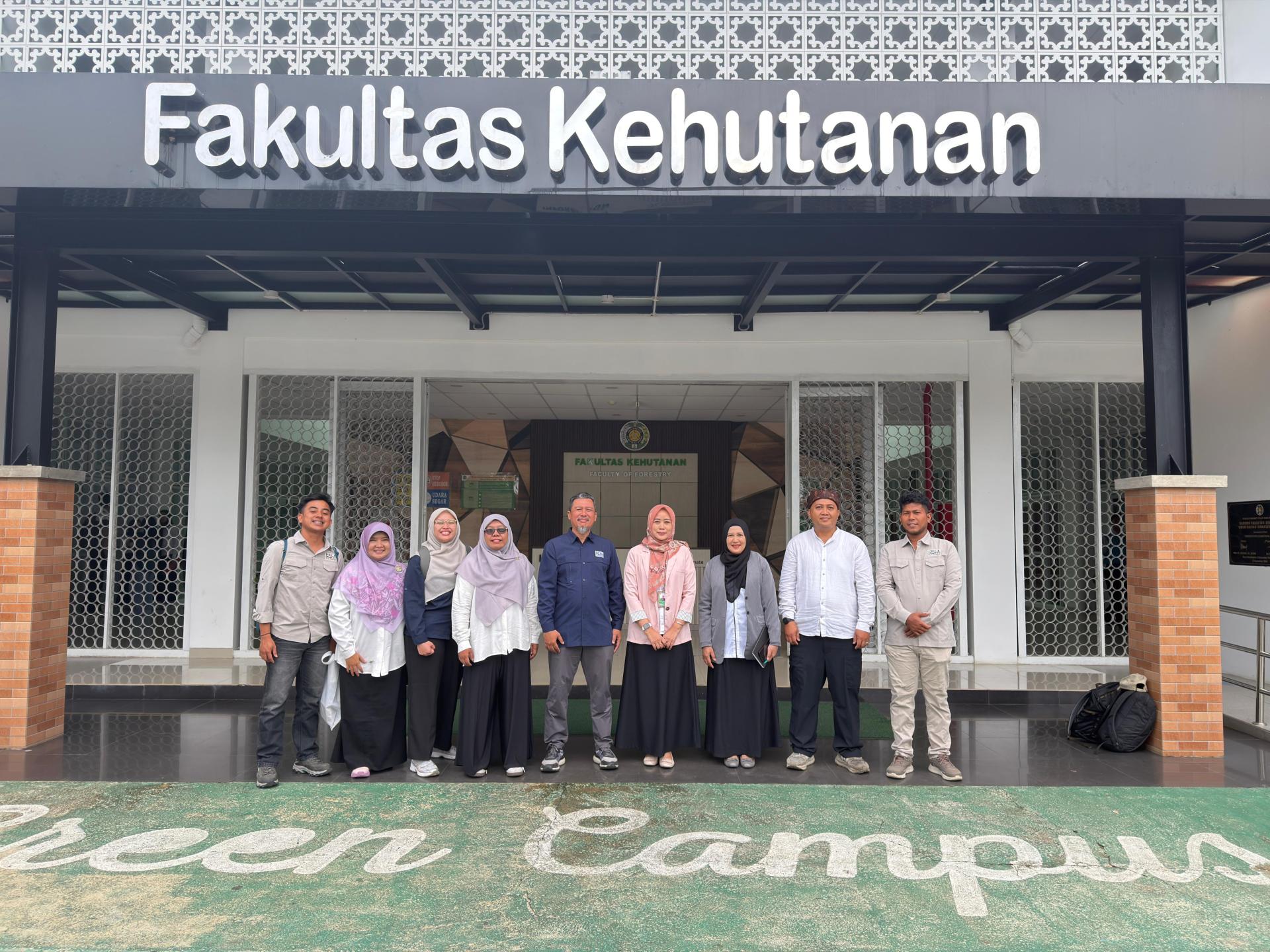
Through this meeting, both parties agreed that numerous opportunities exist for collaboration in supporting the implementation of the Three Pillars of Higher Education (Tri Dharma Perguruan Tinggi). Potential areas of cooperation include joint research projects, collaborative studies, student supervision, implementation of the Independent Learning–Independent Campus (MBKM) program, and the involvement of PRCF Indonesia practitioners as guest lecturers and teaching practitioners.
The collaboration being explored between the Faculty of Forestry USU and PRCF Indonesia is also closely aligned with the achievement of the Sustainable Development Goals (SDGs). Community empowerment programs centered on non-timber forest products such as coffee and asam gelugur contribute to SDG 1 (No Poverty) by increasing incomes and creating economic opportunities for communities living near forests. These initiatives also support SDG 8 (Decent Work and Economic Growth) by promoting productive employment and strengthening sustainable local economies based on natural resources.
Furthermore, sustainable natural resource management and improved community welfare contribute to SDG 3 (Good Health and Well-Being) by fostering healthier living environments and improving quality of life. Conservation and land rehabilitation activities also help protect watersheds and enhance water quality, thereby supporting SDG 6 (Clean Water and Sanitation).
At the same time, PRCF Indonesia’s conservation initiatives—including wildlife protection, biodiversity monitoring, agroforestry development, and community-based forest management—represent concrete actions toward SDG 13 (Climate Action). These programs also directly contribute to SDG 15 (Life on Land) through habitat conservation, protection of flora and fauna, and the restoration of terrestrial ecosystems.
These initiatives are further strengthened through the partnership between the university and the conservation organization, reflecting the implementation of SDG 17 (Partnerships for the Goals). The collaboration between the Faculty of Forestry USU and PRCF Indonesia is expected to generate innovations, research outputs, and community service programs that provide tangible benefits for both society and the environment.
This meeting marks an important first step in building synergy between academia and conservation practitioners to support sustainable forest management, biodiversity conservation, and community welfare improvement. Looking ahead, the partnership is expected to make broader contributions to sustainable development at the local, national, and global levels.