


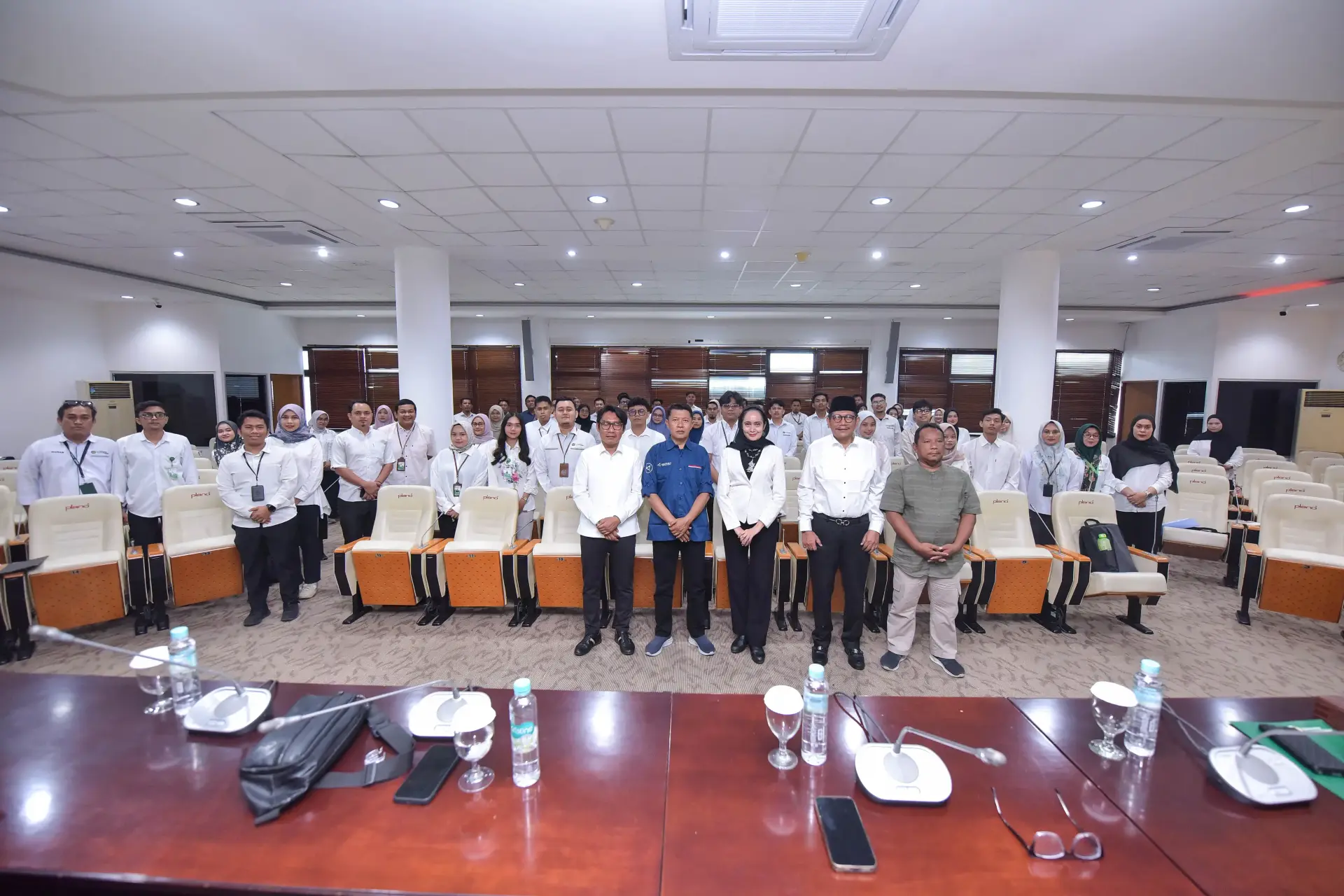
Universitas Sumatera Utara (USU) continues to strengthen the quality of its public communication through a Public Relations Technical Training (Bimbingan Teknis/Bimtek) held on Monday, July 20, 2026, at the Academic Senate Room, Third Floor, USU Rectorate Building. Organized by the Directorate of Public Relations, Protocol, and Promotion, the training aimed to enhance the competencies of public relations personnel across the university in responding to the evolving landscape of digital public communication.
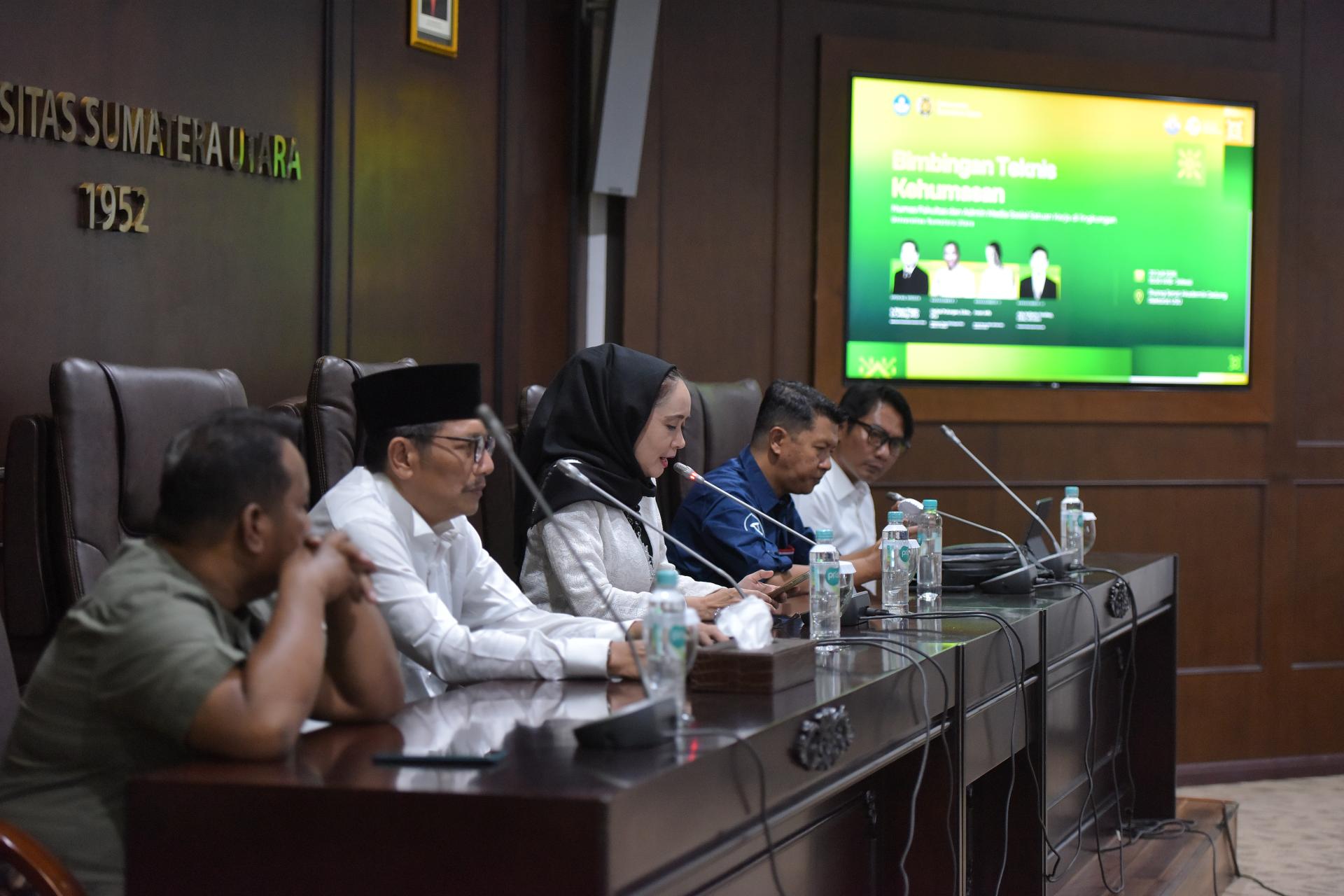
The training featured speakers from the university leadership, national media organizations, television broadcasters, and social media practitioners. Through a comprehensive series of presentations, participants gained practical knowledge on institutional publication standards, press release writing, video content production, and effective social media management strategies to strengthen Universitas Sumatera Utara's image and reputation in the public sphere.
Opening the event, University Secretary Ir. Ikhsan Siregar, S.T., M.Eng., Ph.D., emphasized that public relations plays a strategic role in building the university's reputation. He noted that the rapid development of digital media requires every unit within the university to produce publications that are not only informative but also consistent in visual identity and messaging, thereby reinforcing USU's institutional brand.
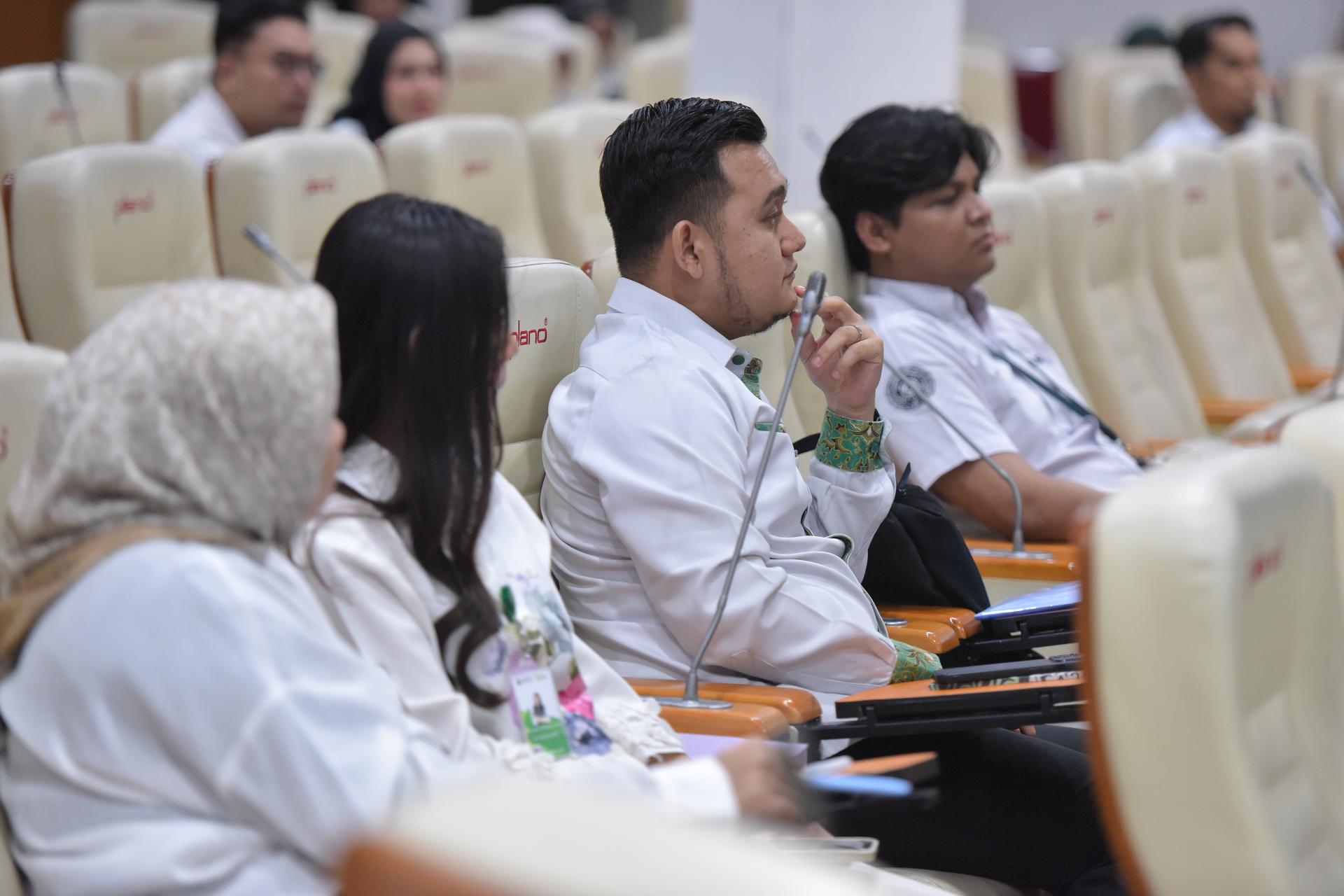
He explained that inconsistencies still exist in the preparation of various communication materials, including promotional flyers, news articles, and social media content. Therefore, the Public Relations Technical Training was designed to establish standardized publication practices across the university, ensuring that all published information consistently reflects USU's professionalism and institutional identity.
In the first session, Irwan Arfa, Head of the ANTARA News Agency (LKBN ANTARA) North Sumatra Bureau, delivered a presentation on effective press release writing. He stressed that one of the primary responsibilities of public relations professionals is to produce press releases that adhere to journalistic standards, making them clear, newsworthy, and easily understood. According to him, every press release should incorporate the 5W+1H principles, follow the inverted pyramid structure, and be supported by accurate data, credible sources, and quality visual documentation to serve as a reliable source of information for the media.
The next session was presented by Usrizal Pulungan, S.Sos., M.H., Acting Head of the Metro TV Medan Bureau, who discussed the growing importance of videography as a tool for public communication. He explained that video has become one of the most effective communication media because it combines visual storytelling with emotional engagement to deliver messages more effectively to the public.
During his presentation, Usrizal outlined the key stages of video production—from pre-production and production to post-production. In addition to technical aspects such as lighting, composition, camera angles, and video duration, he emphasized that content quality should remain the top priority for institutional public relations teams. According to him, successful communication is measured not only by the speed of publication but also by its ability to professionally represent the institution's credibility.
Meanwhile, Ade Ardianta Harahap, S.Sos., M.I.Kom., a social media practitioner from MedanTalk, presented strategies for creating digital content that adapts to the ever-changing algorithms of social media platforms. He highlighted the importance of maintaining a consistent visual identity, following digital trends strategically, and developing content with a clear communication flow—from capturing audience attention through a compelling hook, delivering valuable information, to concluding with an effective call to action.
Participants were also introduced to various digital content distribution platforms, as well as design and video editing applications that can improve the productivity of public relations teams. Nevertheless, Ade emphasized that creativity remains the most critical factor, enabling each institution to develop a distinctive visual identity that is both recognizable and memorable to the public.
The implementation of this Public Relations Technical Training also reflects Universitas Sumatera Utara's commitment to supporting the United Nations Sustainable Development Goals (SDGs), particularly SDG 4 (Quality Education) by strengthening human resource capacity in communication, publication, and digital literacy as essential components of quality higher education governance. The program also contributes to SDG 16 (Peace, Justice and Strong Institutions) by promoting transparent, accountable, and effective institutional governance through accurate, credible, and accessible public communication. Furthermore, the participation of experts from ANTARA News Agency, Metro TV Medan, and the social media platform MedanTalk demonstrates the implementation of SDG 17 (Partnerships for the Goals) by fostering collaboration between higher education institutions, mass media, and communication professionals to build a more professional, adaptive, and public-oriented information ecosystem.