


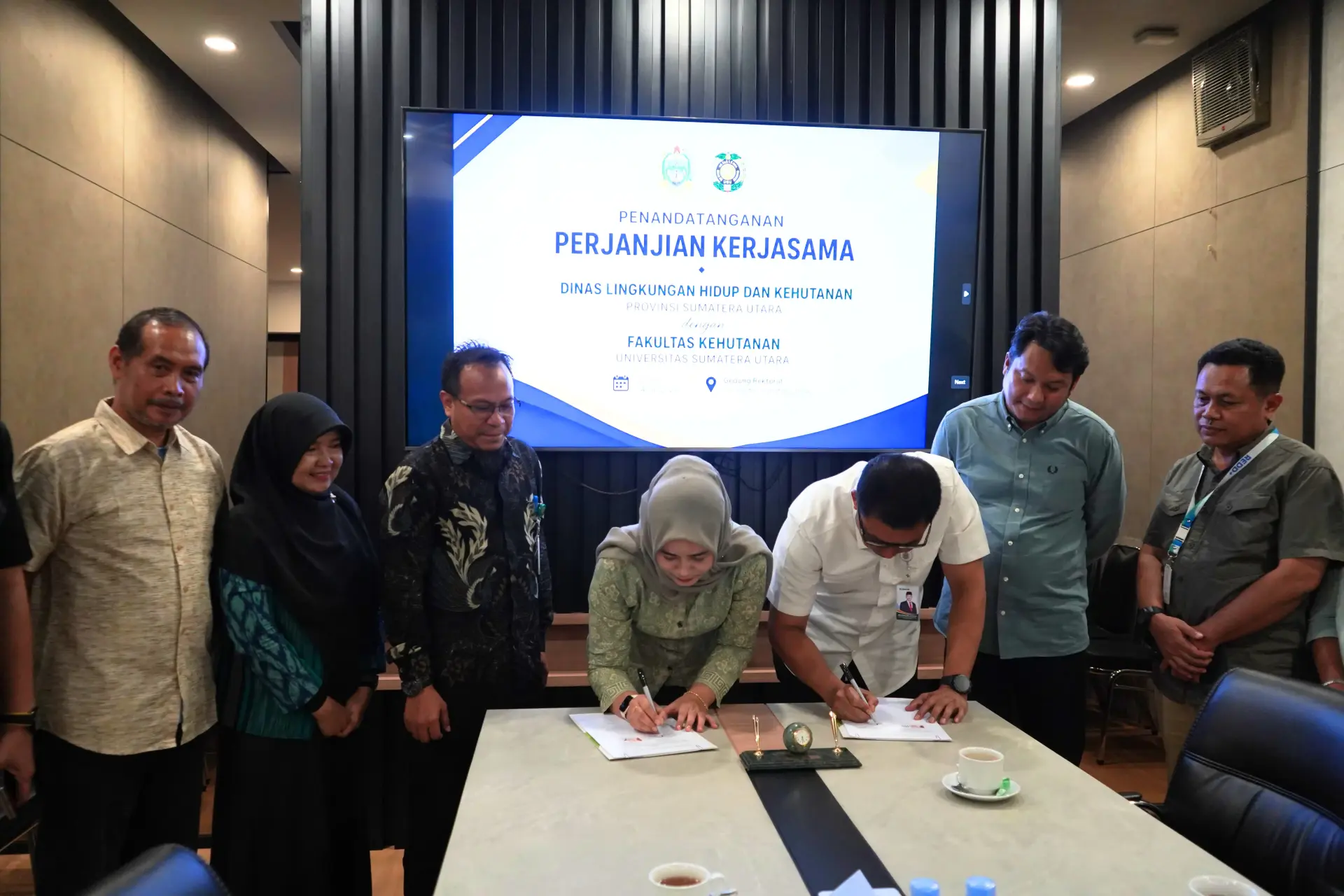
HUMAS FAHUTAN – The Faculty of Forestry, Universitas Sumatera Utara (USU), and the North Sumatra Environment and Forestry Agency (DLHK) officially signed a Cooperation Agreement (PKS) as a strategic step to strengthen collaboration between the university and the provincial government in supporting the sustainable management of natural resources and biodiversity conservation. The agreement, signed on Tuesday (14 July 2026) at the USU Rectorate Building, serves as the foundation for implementing various collaborative initiatives in education, research, community service, innovation, and human resource development.
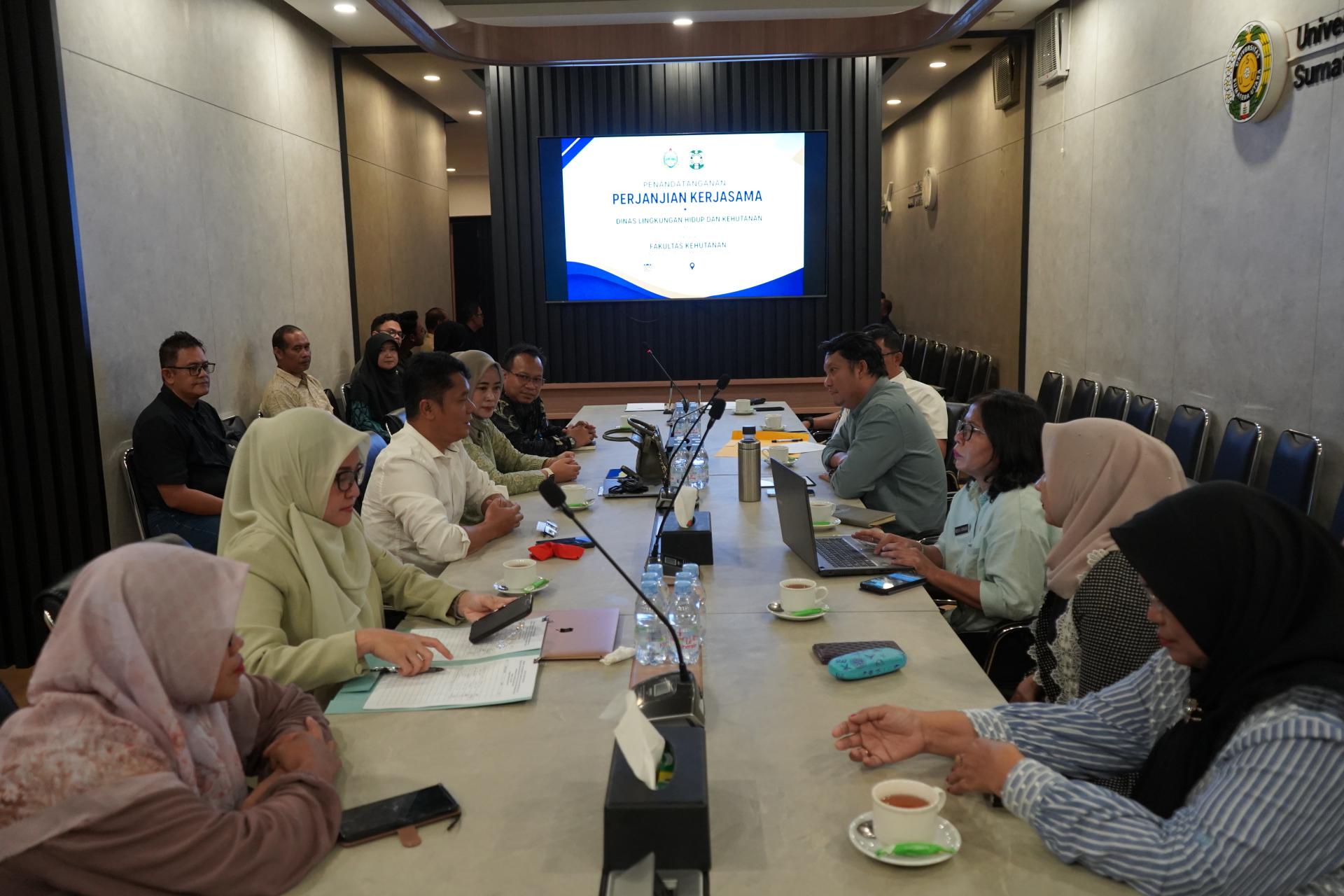
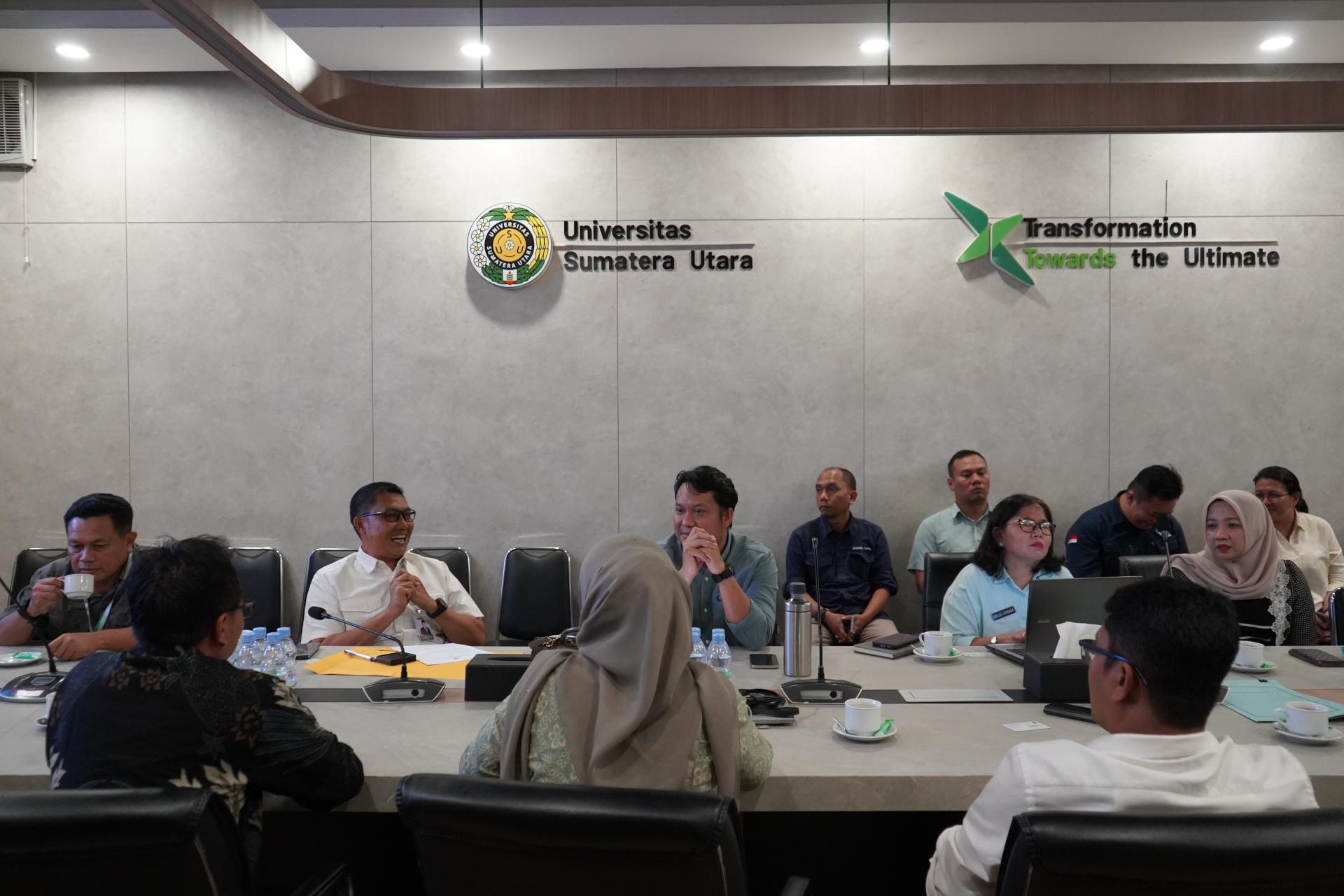
The signing ceremony was attended by the Head of the North Sumatra Environment and Forestry Agency, Heri W. Marpaung, S.STP., M.AP., along with his delegation. Representing Universitas Sumatera Utara were the Vice Rector for Research, Community Service, and Cooperation, Prof. Dr. Eng. Himsar Ambarita; the Dean of the Faculty of Forestry, Prof. Arida Susilowati; the Vice Dean for Administration, Finance, Human Resources, and Academic Infrastructure, Dr. Luthfi Hakim; the Dean's Advisor for Cooperation, Dr. Nelly Anna; Dr. Ridahati Rambey; and the Secretary of the Directorate of Innovation, Sustainable Development, and Science and Technology Park, Prof. Apri Heri Iswanto.
The partnership demonstrates the commitment of both institutions to fostering closer collaboration in addressing various challenges related to forest management and environmental conservation in North Sumatra. One of the primary focuses of the agreement is the development of the North Sumatra Biodiversity Park (Taman Kehati). The initiative forms part of the North Sumatra Provincial Government's development vision, implemented through its priority programs and strategic regional projects. The Biodiversity Park is expected to strengthen biodiversity conservation efforts, enhance environmental quality, and provide a dedicated space for education, research, scientific development, and learning for academics, researchers, students, and the wider community.
Through this partnership, the Faculty of Forestry USU will contribute academic expertise through research, scientific studies, technical assistance, and innovation to support the planning, development, and management of the Biodiversity Park. These contributions are expected to establish a conservation area that not only serves as a habitat for preserving native plant species but also functions as a living laboratory for scientific research, an environmental education center, and a model for science-based and sustainable biodiversity management.
The collaboration between the provincial government and the university is expected to generate innovative and practical scientific solutions to support sustainable forest management and environmental conservation in North Sumatra. Dean of the Faculty of Forestry USU, Prof. Arida Susilowati, emphasized that the partnership reflects the faculty's commitment to strengthening the role of higher education institutions in supporting regional development through the implementation of the university's Three Pillars of Higher Education (Tri Dharma Perguruan Tinggi). The collaboration with the North Sumatra Environment and Forestry Agency is expected to foster innovation, strengthen science-based natural resource management, and deliver tangible benefits for sustainable development and community well-being.
The partnership also supports the achievement of the Sustainable Development Goals (SDGs), particularly SDG 15 (Life on Land), through strengthened biodiversity conservation efforts and the development of conservation areas, as well as SDG 17 (Partnerships for the Goals) by reinforcing collaboration among government institutions, universities, and other stakeholders in advancing sustainable development. Through this synergy, the Faculty of Forestry USU and the North Sumatra Environment and Forestry Agency aim to implement strategic programs that promote environmental sustainability, strengthen human resource capacity, and support the sustainable management of natural resources for future generations.