


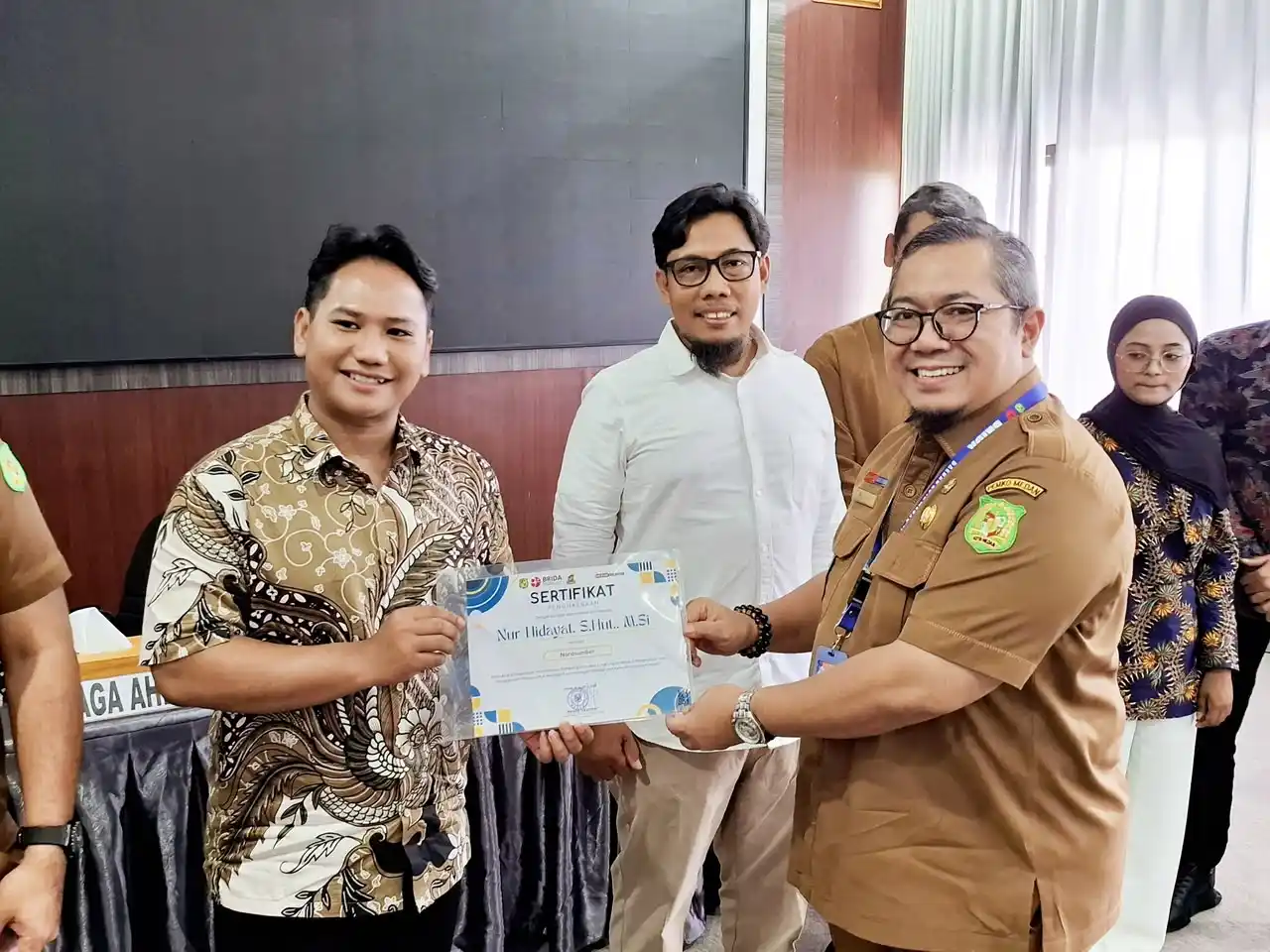
The Faculty of Forestry of Universitas Sumatera Utara (USU) demonstrated its active contribution to strengthening scientific collaboration through the involvement of its lecturers and education staff in the Research Network (Jarlit) of the Regional Research and Innovation Agency (BRIDA) of Medan City. Their participation was part of the Scientific Forum on Urban Issues held during the Medan Urban Tree Management Symposium on Monday (August 10, 2026), at the Theater Room, 2nd Floor, FISIP USU Dean's Building, Medan.
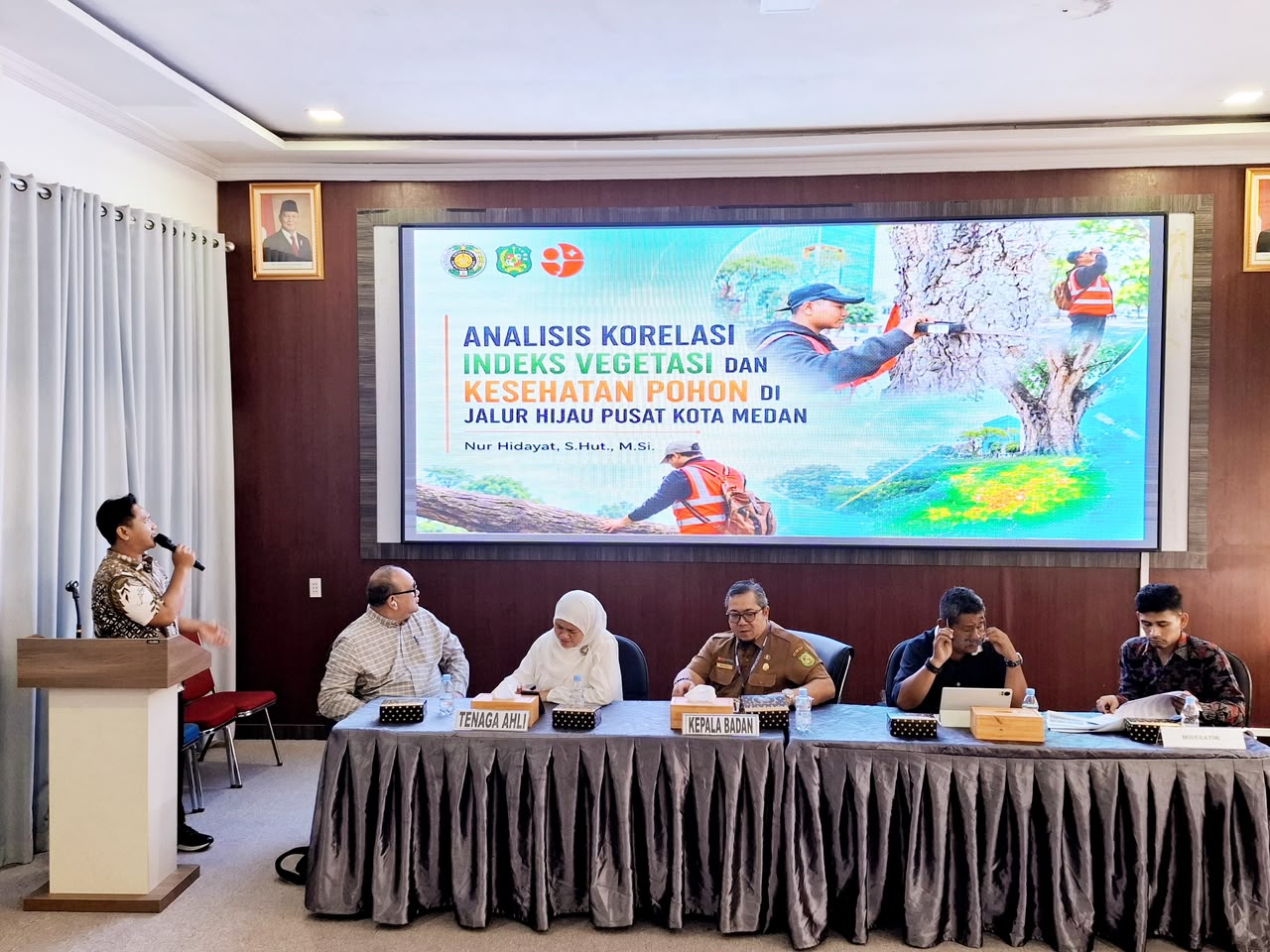
At the forum, three representatives from the USU Faculty of Forestry served as speakers, presenting research findings relevant to environmental and urban development issues. Dr. Ir. Alfan Gunawan Ahmad, S.Hut., M.Si., IPU., presented research entitled “The Comfort Level of Cadika Park Urban Green Open Space (RTH) in Medan City Based on the Temperature Humidity Index.”
Meanwhile, Prof. Ir. Rahmawaty, S.Hut., M.Si., Ph.D., IPU., presented research entitled “Carbon Valuation and Spatial Prioritization of Coastal Green Infrastructure to Support Eco Forest City Planning.” The research strengthened the scientific perspective on the importance of green infrastructure and carbon valuation in supporting sustainable urban planning.
The contribution also came from an education staff member of the USU Faculty of Forestry, Nur Hidayat, S.Hut., M.Si., who served as a speaker by presenting research entitled “Analysis of the Correlation between Vegetation Indices and Tree Health along the Greenways of Medan City Center.” This involvement represents an important step in expanding the role of education staff in supporting scientific activities and knowledge development in the fields of forestry and the environment.
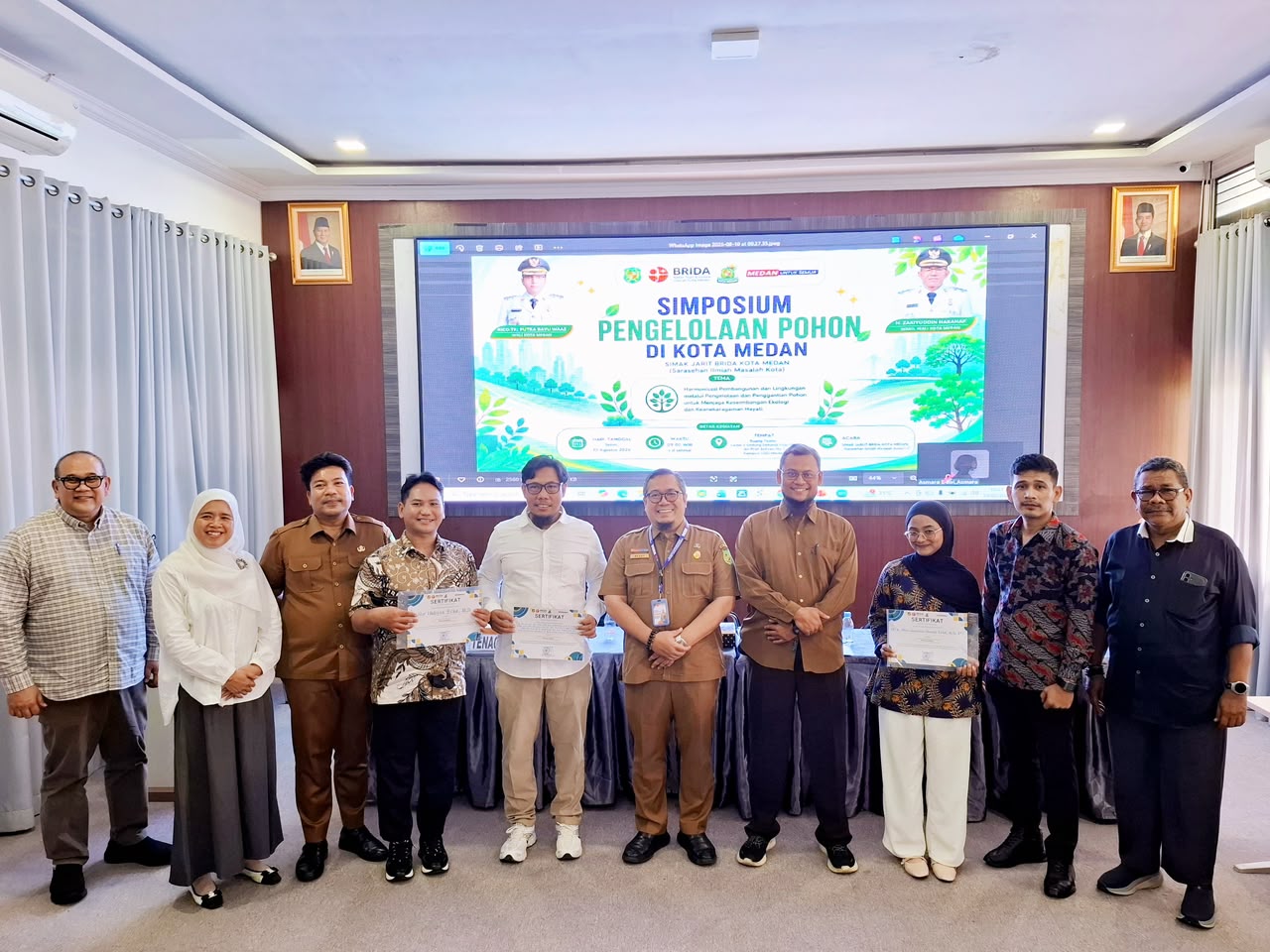
The participation of the lecturers and education staff received support from the Dean's Office of the USU Faculty of Forestry. Their involvement also reflects the faculty's commitment to building strong collaboration with various stakeholders while promoting the use of knowledge and research findings to address urban environmental challenges.
More than just a scientific forum, the participation of the USU Faculty of Forestry in the Medan City BRIDA Research Network highlights the importance of collaboration among higher education institutions, government agencies, researchers, and stakeholders in formulating solutions for urban sustainability. The various topics discussed demonstrated that the management of urban green open spaces, tree health, green infrastructure, and carbon valuation are closely interconnected with the quality of life of communities and the environmental resilience of cities.
The involvement of education staff in the forum also represents a positive step toward strengthening the academic ecosystem within the USU Faculty of Forestry. The role of education staff extends beyond administrative and structural support and can also develop into active contributions to knowledge advancement, quality education, climate change mitigation, and environmental conservation.
Through such collaboration, the USU Faculty of Forestry continues to promote cross-sectoral synergy in delivering science-based solutions for urban environmental management. These efforts are aligned with SDG 4: Quality Education, SDG 11: Sustainable Cities and Communities, SDG 13: Climate Action, and SDG 15: Life on Land.