


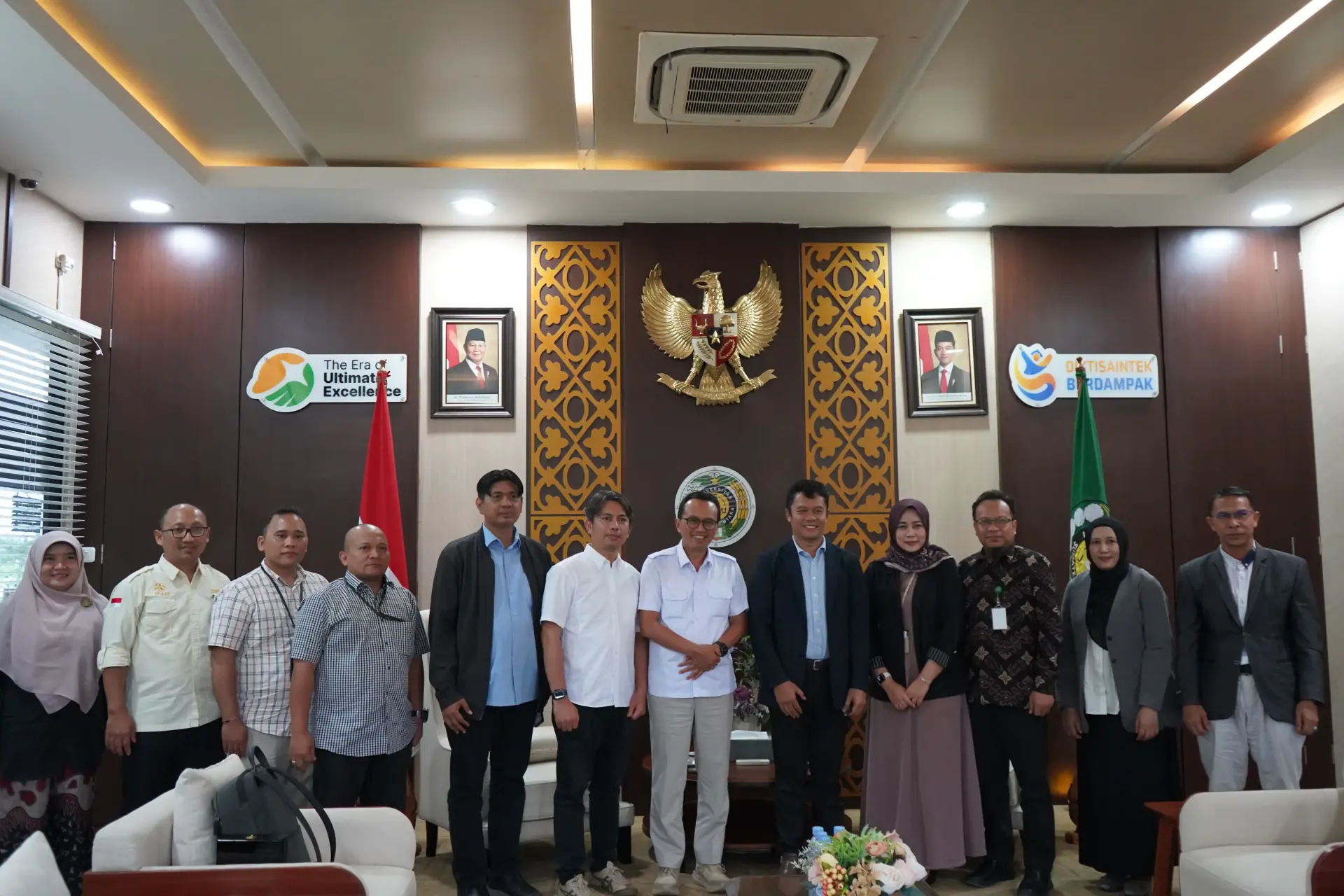
HUMAS FAHUTAN – Universitas Sumatera Utara (USU) welcomed a delegation from Perum Perhutani to discuss the management of Forest Product Utilization Business Licenses (PBPHH) for several forestry companies in North Sumatra. The meeting took place on Thursday, 2 July 2026, in the Rector's Meeting Room at the USU Rectorate Building, Padang Bulan Campus, Medan.
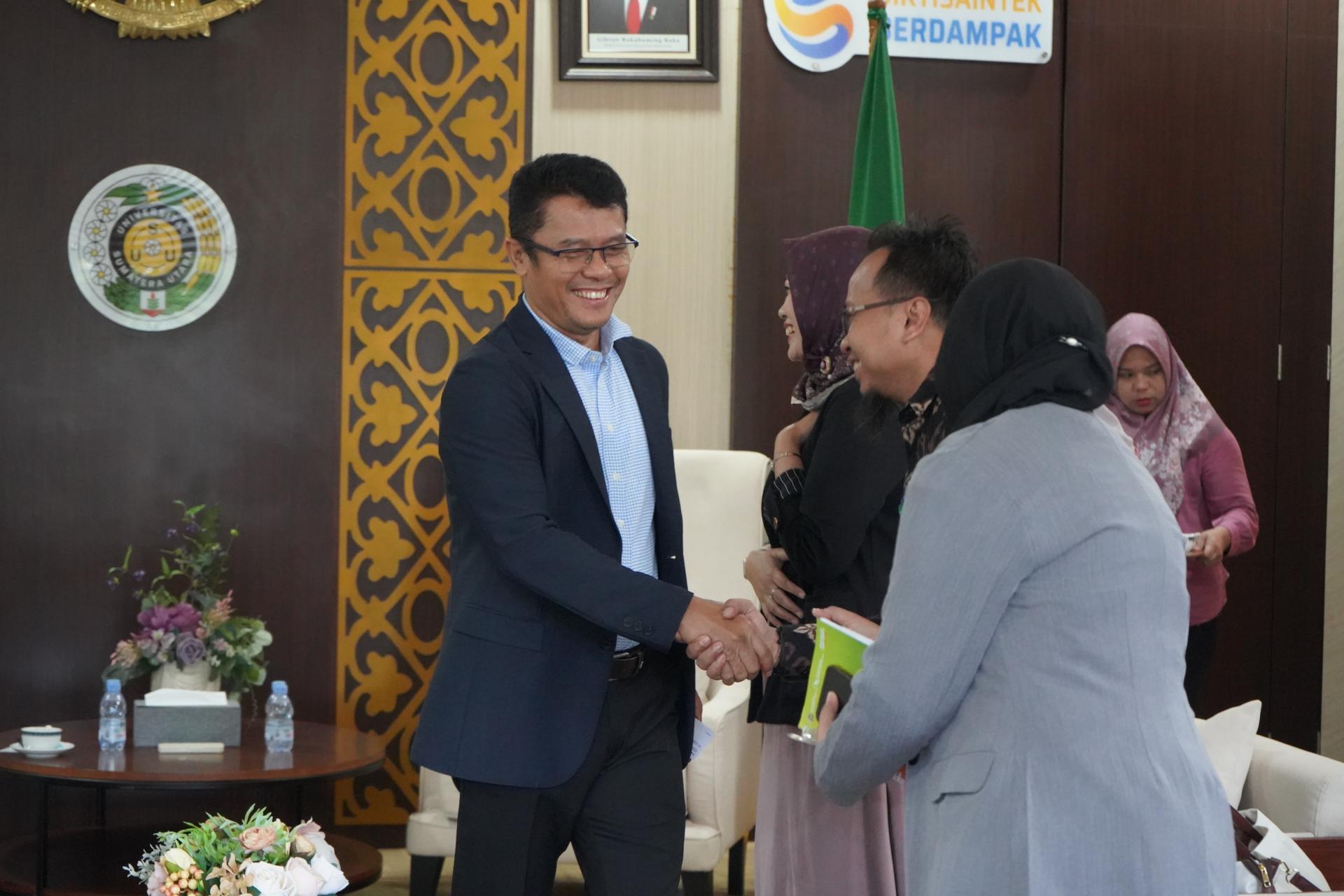
The meeting was chaired by USU Vice Rector III, Prof. Dr. Eng. Himsar Ambarita, S.T., M.T. Also in attendance were the Dean of the Faculty of Forestry USU, Prof. Dr. Arida Susilowati, S.Hut., M.Si., Vice Dean II Dr. Ir. Luthfi Hakim, S.Hut., M.Si., Vice Dean III Dr. Anita Zaitunah, S.Hut., M.Sc., Social Forestry lecturer Dr. Oding Affandi, S.Hut., M.P., and the Dean's Expert Staff, Dr. Nelly Anna, S.Hut., M.Si.
The Perum Perhutani delegation was led by Anggar Widyatmoko, Commercial Director and Acting Director of Planning and Development. The delegation also included Sofiudin Nurmansyah, Corporate Secretary of Perhutani; Errik Alberto, Head of Perhutani's Multi-Business Division; and Ali, Tison, and Annas.
The meeting served as a strategic forum to discuss various issues concerning companies holding PBPHH licenses in North Sumatra, including PT Toba Pulp Lestari. The discussion brought together perspectives from both industry and academia in an effort to promote more sustainable, transparent, and community-oriented forestry governance while ensuring environmental conservation.
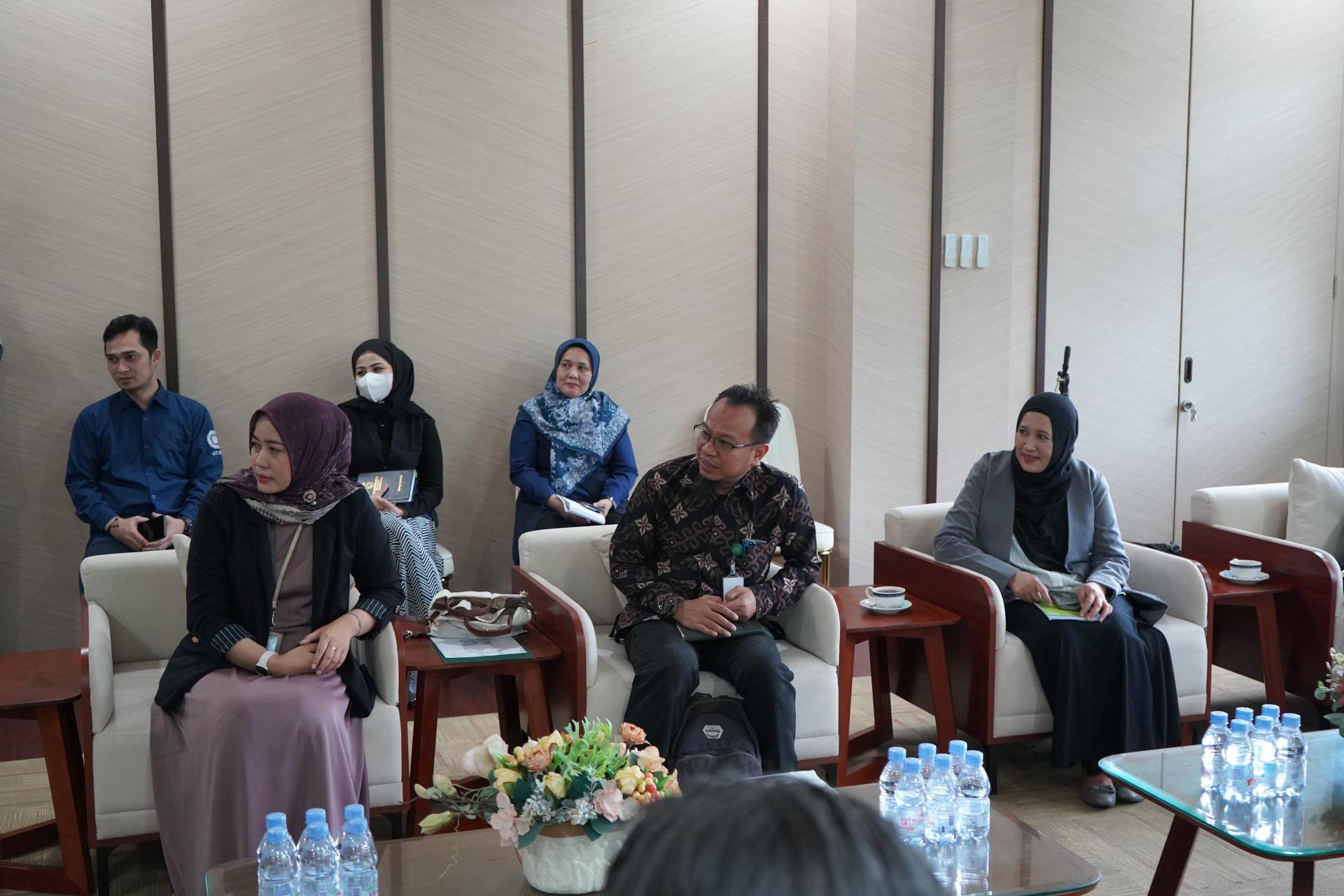
During the meeting, Perhutani explained that assessing forestry companies requires the involvement of experts from various disciplines and perspectives. According to the company, collaboration with universities is essential to produce objective, comprehensive, and science-based assessments. Therefore, Perhutani expressed its hope that Universitas Sumatera Utara, particularly the Faculty of Forestry, would serve as a strategic partner by involving its academics in conducting assessments of PBPHH permit holders across North Sumatra.
Responding to the proposal, Prof. Himsar Ambarita emphasized that the success of forestry companies depends not only on technical expertise and regulatory compliance but also on their ability to establish harmonious relationships with surrounding communities. Drawing on his understanding of the social and cultural characteristics of the Lake Toba region, he recommended that companies engage a broad range of stakeholders throughout the preparation and implementation of business licensing processes, including local governments, religious leaders, churches, indigenous communities, and residents living around the companies' operational areas. According to him, such a collaborative approach is essential for building public trust while fostering a conducive and sustainable business environment.
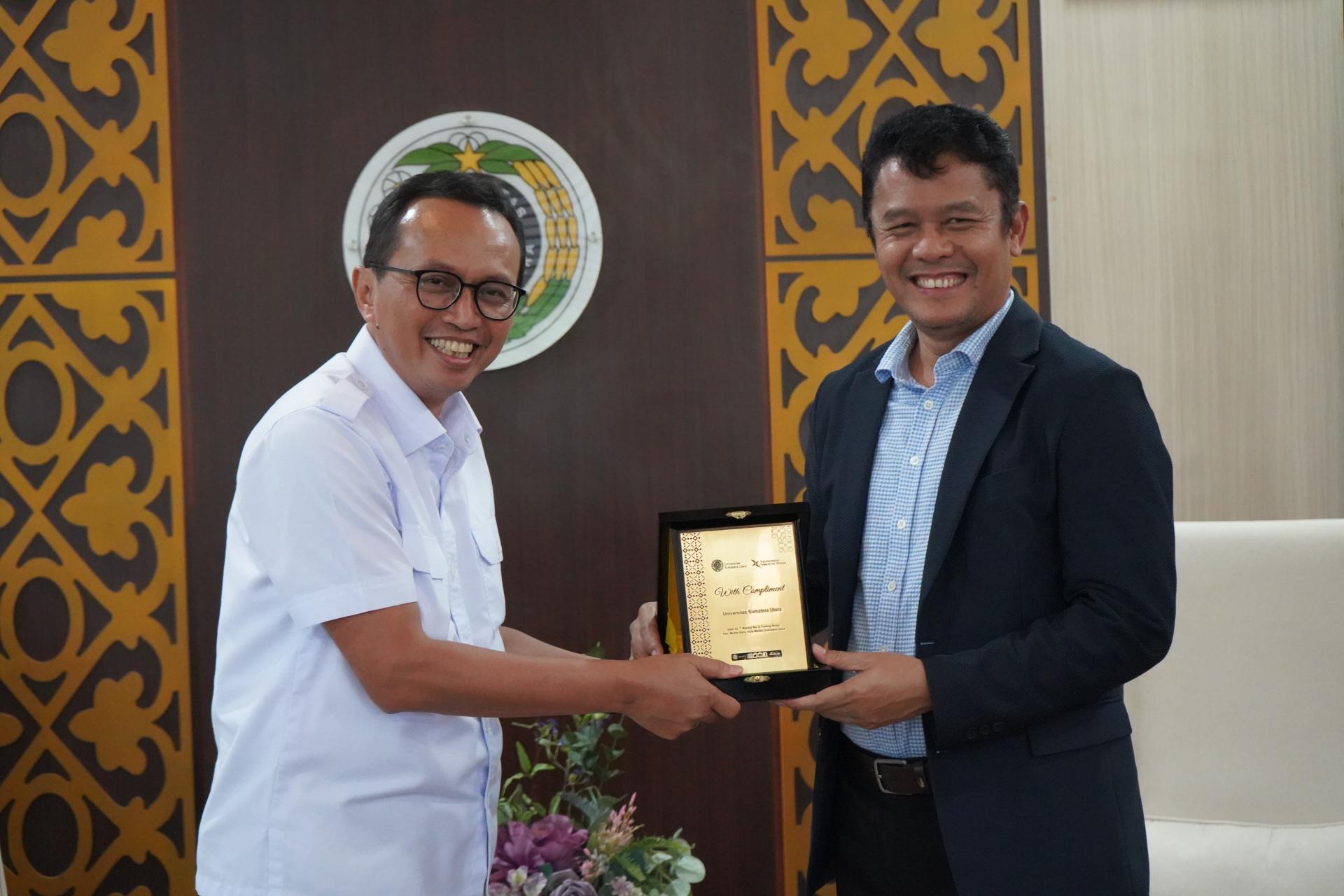
"I believe it is important to involve religious leaders, particularly the church," said Prof. Himsar.
The meeting was conducted in a warm and collegial atmosphere. In addition to discussing strategic issues concerning the forestry industry, both parties exchanged experiences, ideas, and perspectives on the challenges of forest resource management in North Sumatra. The open and constructive dialogue reflected a shared commitment to strengthening collaboration between academia and the forestry sector in producing science-based recommendations.
Through this meeting, it is expected that closer collaboration will be established between Perum Perhutani and Universitas Sumatera Utara, particularly the Faculty of Forestry, in supporting assessment activities, developing scientific recommendations, and formulating policies that promote sustainable forestry management practices. Synergy among universities, industry, government, and local communities is expected to become the foundation for building a competitive, inclusive, and environmentally sustainable forestry sector in Indonesia.
The meeting also aligns with Universitas Sumatera Utara's commitment to supporting the Sustainable Development Goals (SDGs), particularly SDG 17 (Partnerships for the Goals), by strengthening collaboration between higher education institutions and the forestry sector to produce evidence-based recommendations for forestry company management. In addition, the initiative supports SDG 15 (Life on Land) by promoting the sustainable management of forest product utilization while safeguarding environmental conservation, and SDG 16 (Peace, Justice and Strong Institutions) by encouraging transparent, participatory licensing governance that involves academics, government institutions, the private sector, and local communities.