


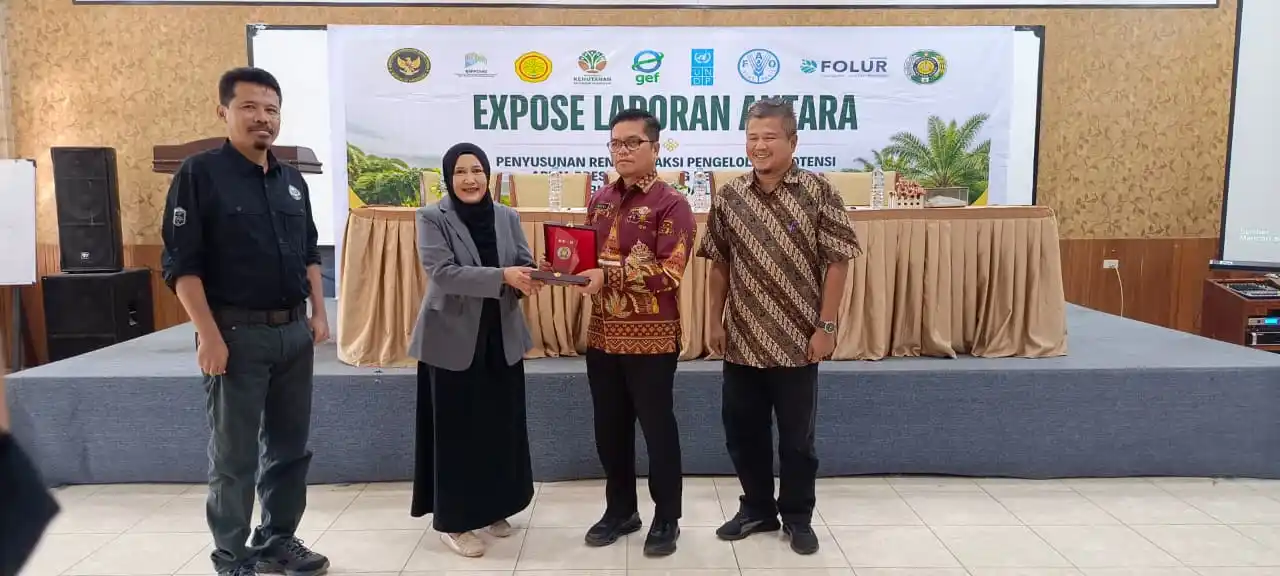
The Faculty of Forestry, Universitas Sumatera Utara (USU), held the Interim Report Presentation on the Preparation of an Action Plan for the Sustainable Management of Potential Preservation Areas in Mandailing Natal Regency, North Sumatra, on Thursday (November 5, 2026), at the Ballroom of Hotel Rindang, Mandailing Natal Regency. This activity was part of efforts to strengthen natural resource governance through scientific approaches, integrated planning, and collaboration between higher education institutions and local governments.
This activity was part of the implementation of the FOLUR (Food Systems, Land Use, and Restoration) Project, Output 6.1, which focuses on preparing an action plan for the sustainable management of potential preservation areas. Its implementation was supported by funding from the FOLUR Project, managed by the Ministry of Forestry through the Directorate General of Natural Resources and Ecosystem Conservation, as one of the efforts to promote responsible natural resource management and land utilization.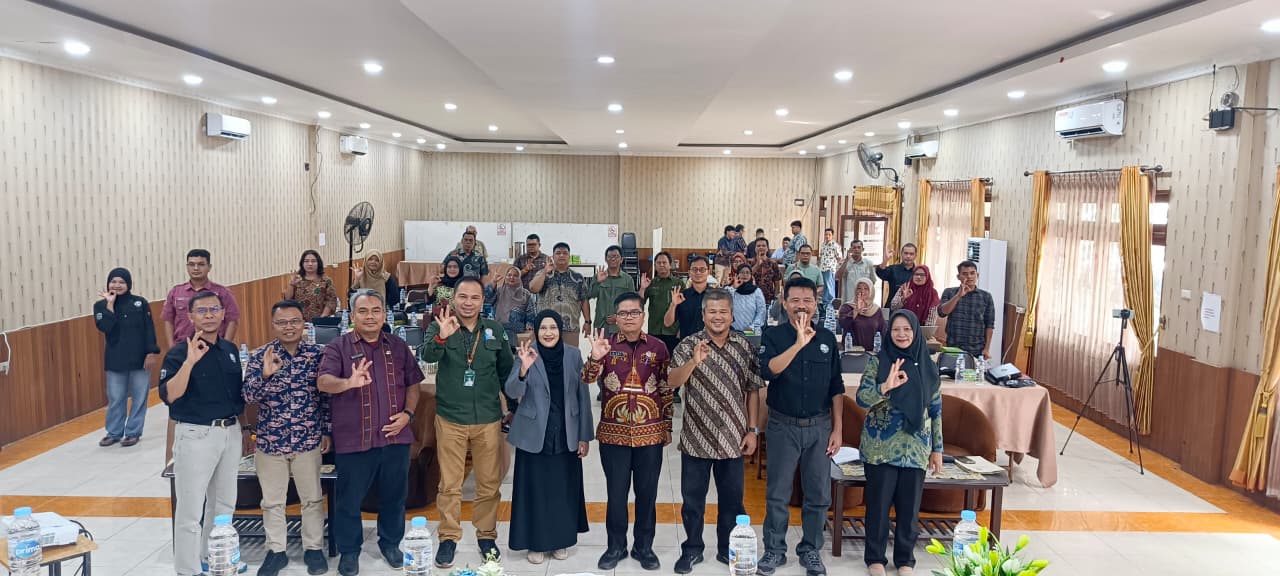
The series of activities began with remarks from the Dean of the Faculty of Forestry USU, Prof. Dr. Arida Susilowati, S.Hut., M.Si., represented by the Vice Dean for Research, Community Service, Cooperation, and Internationalization, Dr. Anita Zaitunah. Subsequently, the Regional Secretary of Mandailing Natal Regency, Afrizal Nasution, S.E., M.M., also delivered remarks on behalf of the local government as a form of support for the implementation of the activity and the strengthening of natural resource management efforts in the region.
Also attending the event was the Manager for Research, Community Service, Cooperation, and Internationalization of the Faculty of Forestry USU, Dr. Ridahati Rambey, together with guests and relevant stakeholders.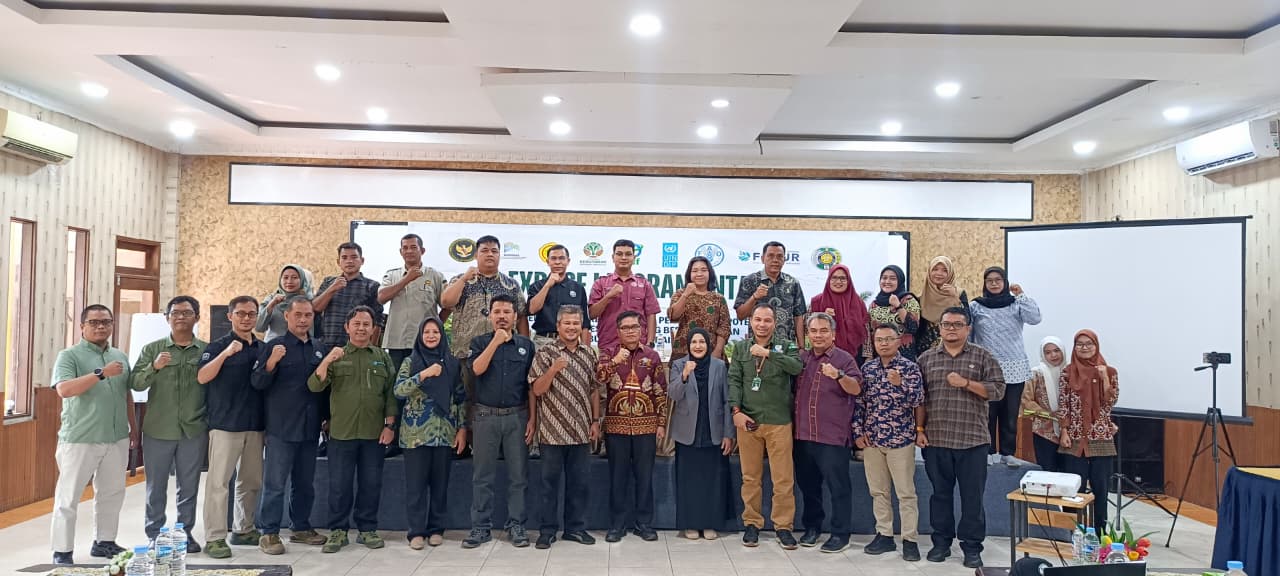
During the presentation session, the Faculty of Forestry USU Implementation Team presented the study findings and progress in developing the action plan as a foundation for formulating preservation area management strategies that align with the characteristics, conditions, and potential of Mandailing Natal Regency. This region has abundant natural resources, ranging from forest areas and biodiversity to land and water resources, which play an important role in maintaining ecosystem balance while supporting the social and economic livelihoods of the community.
The preparation of the action plan is expected to serve as a basis for identifying potential, strengthening management direction, and encouraging the wise utilization of the area while continuing to consider ecological functions and community needs. Through this process, academic study findings are expected to be translated into practical planning recommendations relevant to conditions at the local level.
The Faculty of Forestry USU also expressed its appreciation and gratitude to the Mandailing Natal Regency Government for its warm welcome, support, and openness in supporting the series of FOLUR Project activities. Local government support is an important element in strengthening coordination, building a shared perspective, and ensuring that the preparation of the action plan is based not only on scientific study findings but also takes into account the needs and actual conditions of the local community.
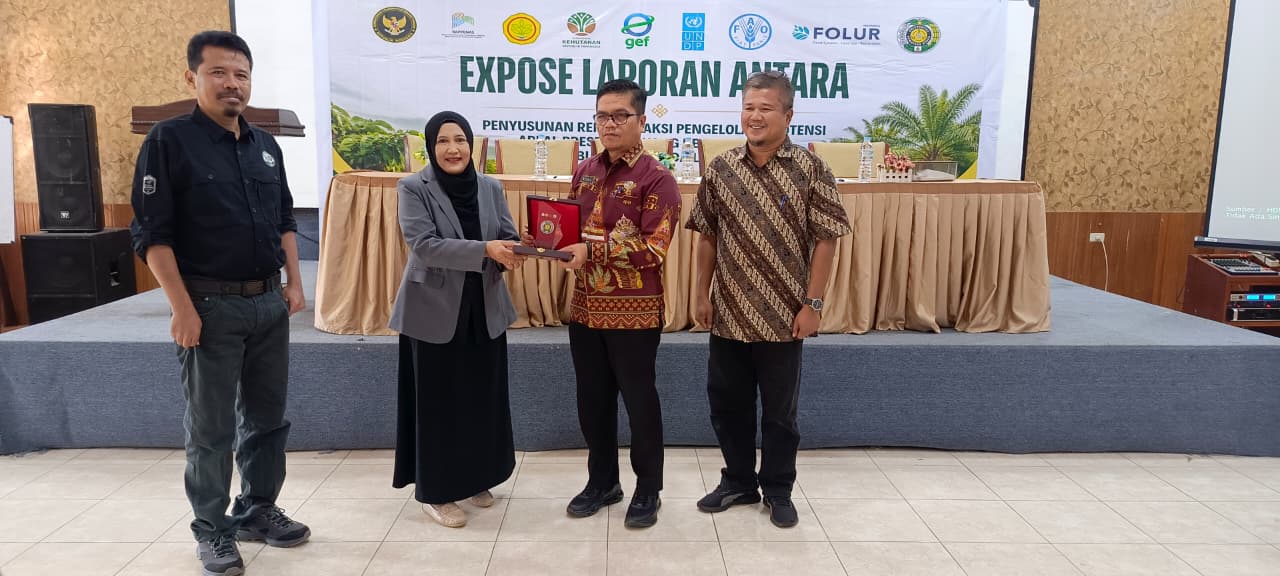
The synergy between higher education institutions and local governments is expected to go beyond the preparation of planning documents and continue through program implementation and concrete measures to maintain the sustainability of natural resources. With strong collaboration, the natural potential of Mandailing Natal Regency is expected to continue providing ecological, social, and economic benefits while being preserved for future generations.
This activity also contributes to the achievement of the Sustainable Development Goals (SDGs), particularly SDG 15 (Life on Land) through efforts to manage and protect terrestrial ecosystems and biodiversity; SDG 13 (Climate Action) through strengthening sustainable land and natural resource management; and SDG 17 (Partnerships for the Goals) through collaboration among higher education institutions, local governments, and stakeholders in realizing sustainable development.